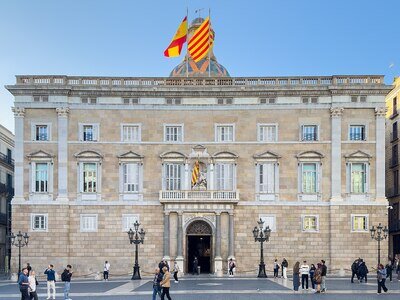
Barcelona is a city that wears its architecture on its sleeve. Walk any street in the Eixample district and you'll find yourself tilting your head upward, caught by a facade that curves where you expected straight lines, or erupts in ceramic color where stone should be gray. This is a city shaped by creative ambition and civic pride, where architects weren't just builders but visionaries competing to outdo each other on a single block.
What makes Barcelona singular is the collision of deep medieval roots with one of the most explosive periods of architectural experimentation Europe has ever seen. The Catalan Modernisme movement of the late 19th and early 20th centuries transformed the city into an open-air laboratory. But Barcelona's story doesn't begin or end there. From the Gothic Quarter's dense stone corridors to the shimmering glass of Torre Glòries on the modern skyline, the city holds nearly a millennium of architectural ambition in constant conversation.
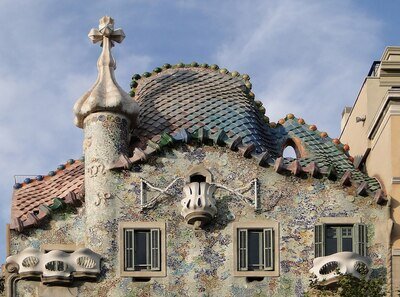
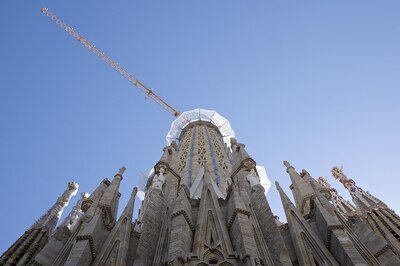
Architecture here is personal. Catalans see their buildings as expressions of identity, and the city's greatest structures carry emotional weight that goes beyond aesthetics. The Sagrada Família isn't just a church; it's a national project spanning generations. Casa Batlló isn't just a house; it's a declaration that beauty can be strange, organic, and utterly free.
Architectural Timeline
Gothic (13th-15th Century)
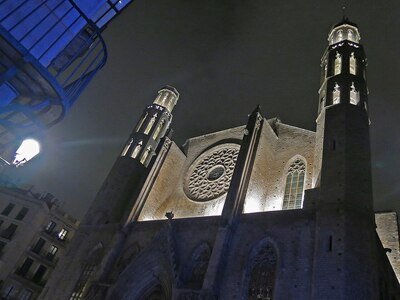
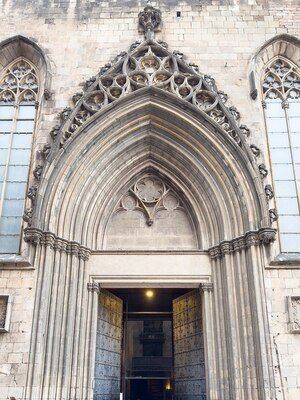
Barcelona's Gothic Quarter preserves one of Europe's most intact medieval urban cores. The Catalan Gothic style differs from its French and English counterparts: wider naves, less vertical emphasis, and a structural confidence that favors horizontal space. Barcelona Cathedral exemplifies this with its broad interior and elegant cloister, while Santa Maria del Mar stands as perhaps the purest expression of Catalan Gothic anywhere. Built in just 54 years by the laborers of the Ribera district, its interior achieves a breathtaking unity of proportion and light.
Modernisme (1880s-1920s)
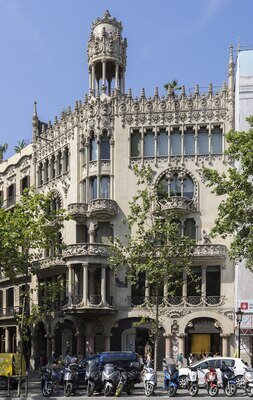
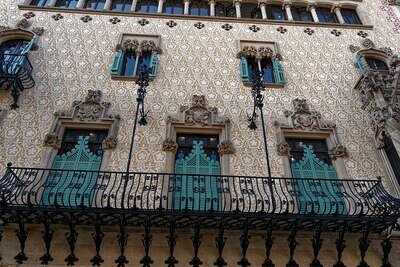
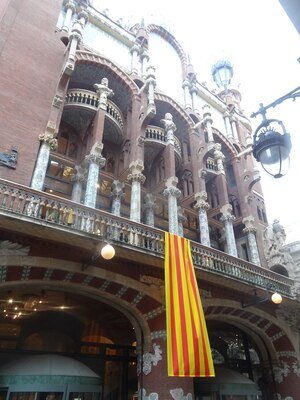
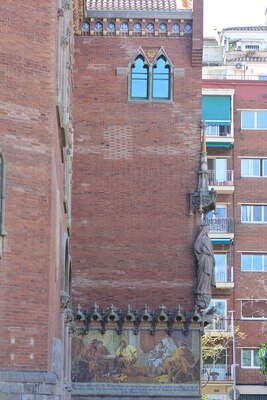
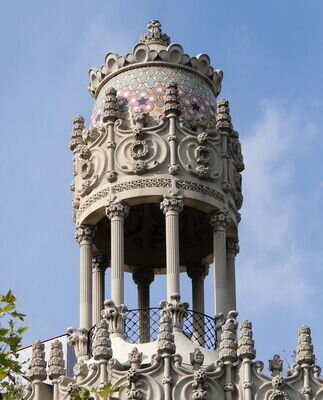
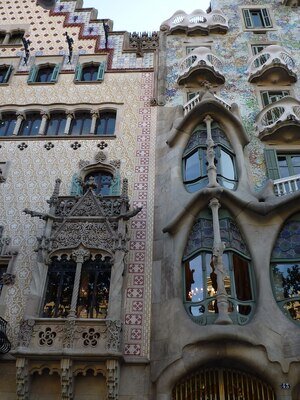
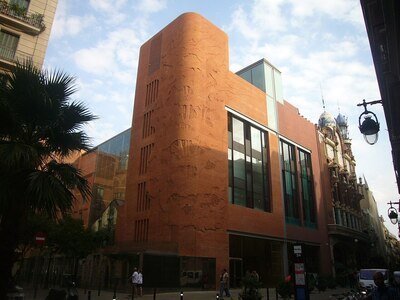
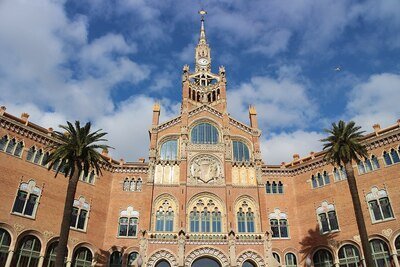
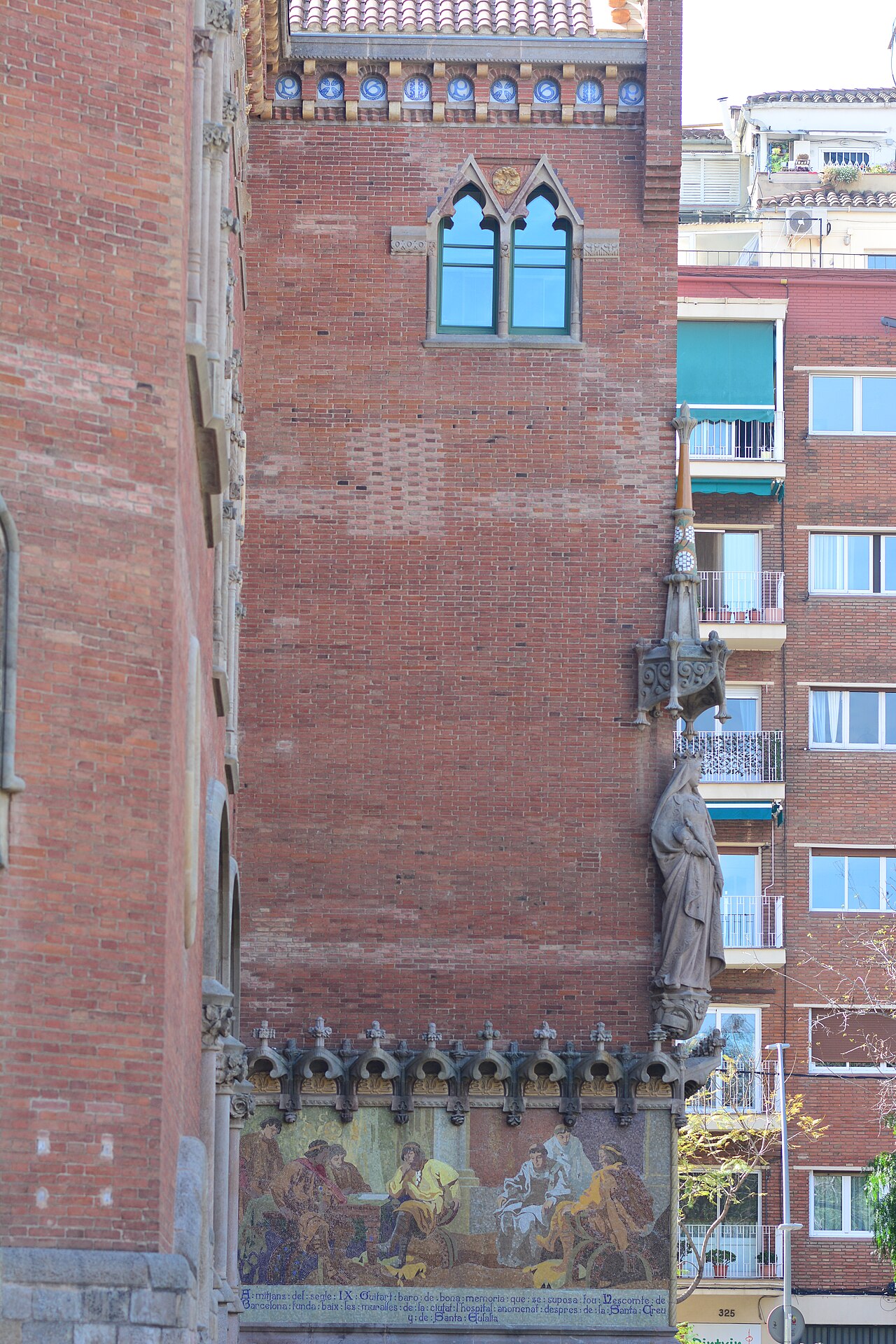
This is the movement that defines Barcelona's international reputation. Modernisme was Catalonia's answer to Art Nouveau, but wilder, more structural, more deeply rooted in craft traditions. The period coincided with Barcelona's industrial wealth and the ambitious expansion of the Eixample grid, which gave architects enormous new facades to work with. The Manzana de la Discòrdia on Passeig de Gràcia puts three competing masterworks side by side: Casa Lleó Morera, Casa Amatller, and Casa Batlló, each by a different architect, each pushing ornamentation in a different direction. Hospital de Sant Pau and Palau de la Música Catalana show how the movement could transform institutional buildings into total works of art.
Early Gaudí and Mudéjar Revival
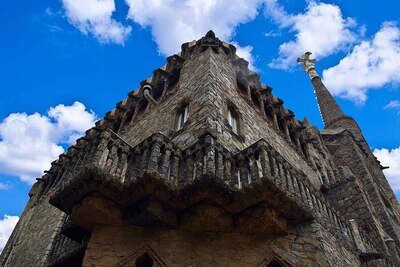
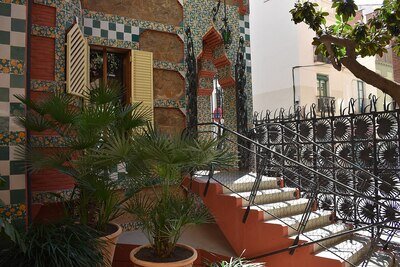
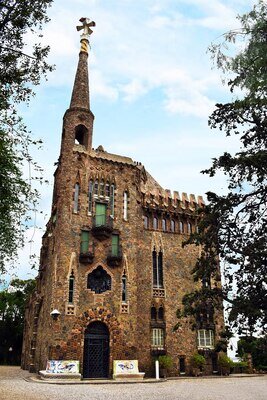
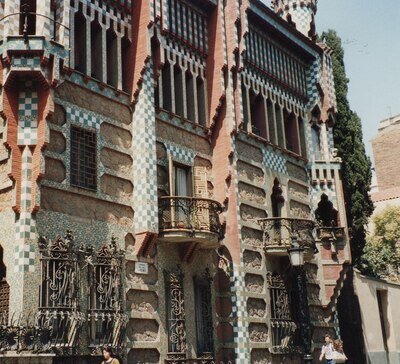
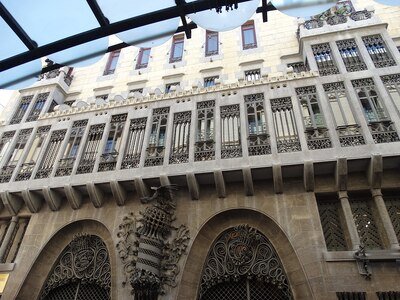
Before Gaudí developed his mature organic language, his early works like Casa Vicens and Palau Güell drew on Mudéjar and orientalist influences, rich in geometric tilework and ironwork. These buildings already show his instinct for breaking conventions, but within a more recognizable decorative framework. Torre Bellesguard, with its Gothic-inspired profile, reveals yet another side: Gaudí reaching back into Catalan medieval history.
Late 20th Century and Contemporary
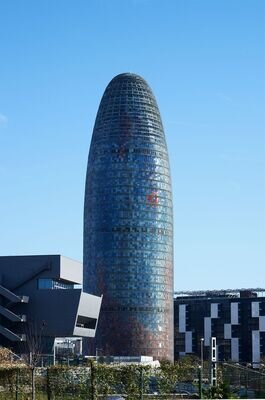
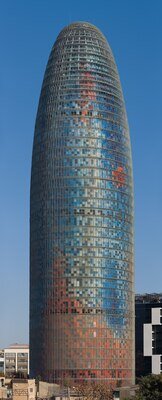
Barcelona's 1992 Olympics triggered a massive urban renewal. The waterfront was rebuilt, new neighborhoods emerged, and international architects arrived. Torre Glòries (originally Torre Agbar, by Jean Nouvel) became the emblem of this new Barcelona: a luminous, bullet-shaped tower clad in colored glass that shifts with the light. The city continues to balance preservation with bold contemporary insertions.
Key Neighborhoods
The Gothic Quarter (Barri Gòtic)
This is medieval Barcelona compressed into narrow lanes and sudden plazas. Barcelona Cathedral anchors the district, but the real pleasure is in the layered texture of the streets themselves: Roman walls visible at the base of medieval buildings, carved doorways leading into hidden courtyards. The quarter rewards slow wandering more than any checklist.
Eixample
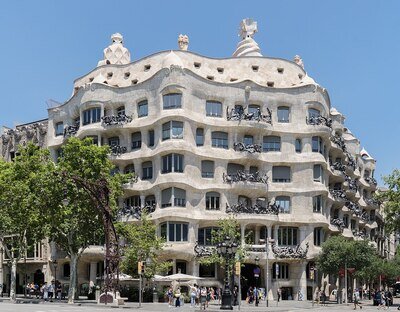
Ildefons Cerdà's 1859 grid plan created the stage for Modernisme. The chamfered corners of each block (called xamfrans) give intersections an octagonal openness, and the generous building plots invited architects to treat every facade as a canvas. Passeig de Gràcia is the main artery, home to Casa Batlló, Casa Milà, and Casa Amatller, but the surrounding streets hide dozens of lesser-known Modernista gems. Look up constantly here.
El Born and Sant Pere
The neighborhood around Santa Maria del Mar and Palau de la Música Catalana mixes medieval street patterns with cultural energy. This area holds some of Barcelona's most rewarding architectural contrasts: a 14th-century basilica a few minutes' walk from a concert hall dripping in mosaic and stained glass.
Notable Architects
Antoni Gaudí (1852-1926)
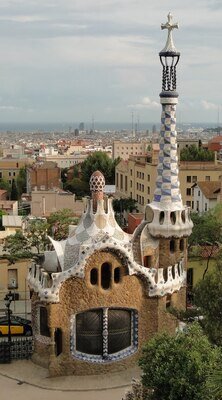
The unavoidable genius. Gaudí developed a structural language derived from nature, using catenary arches, ruled surfaces, and hyperboloid forms decades before computers could model them. His buildings don't just look organic; they are engineered organically. The Sagrada Família, Casa Batlló, Casa Milà, Park Güell, Palau Güell, Casa Vicens, and Torre Bellesguard all bear his mark, each from a different phase of an endlessly evolving practice.
Lluís Domènech i Montaner (1849-1923)
Often overshadowed by Gaudí, Domènech i Montaner was arguably the more complete architect. Hospital de Sant Pau is a masterpiece of urban planning disguised as a hospital, and Palau de la Música Catalana achieves an almost hallucinatory density of ornament without ever feeling heavy. His work is more rationalist than Gaudí's but no less inventive.
Josep Puig i Cadafalch (1867-1956)
The third pillar of Modernisme. Puig i Cadafalch's Casa Amatller channels Northern European Gothic through a Catalan lens, its stepped gable and ceramic details creating a building that feels both familiar and exotic. He was also a significant archaeologist and politician, and his later work moved toward a more restrained Noucentisme style.
Jean Nouvel (1945-)
The French Pritzker laureate's Torre Glòries gave Barcelona its most recognizable contemporary landmark. The tower's skin of 4,500 colored glass louvers creates a shimmering surface that changes throughout the day, nodding to Gaudí's love of color and Montserrat's rocky silhouette.
What to Notice
Pay attention to materials. Barcelona's Modernista architects used local stone, but their real signature was trencadís, the broken-tile mosaic technique perfected by Gaudí and his collaborators. You'll see it on rooftops, chimneys, benches, and facades across the city. The ceramics at Park Güell and the rooftop of Casa Batlló are the famous examples, but once you start looking, trencadís appears everywhere.
Notice the ironwork. Balconies, gates, and railings across the Eixample are works of art in themselves. Casa Milà's seaweed-like iron balconies are the most photographed, but nearly every Modernista building sports hand-forged metalwork of extraordinary quality. The wrought iron at Palau Güell's entrance gates is particularly mesmerizing.
Look at the rooflines. Barcelona's architects treated rooftops as sculptural opportunities. Casa Milà's warrior-like chimneys, Casa Batlló's dragon-spine ridge, and the mosaic towers of Hospital de Sant Pau all reward the upward glance. Bring binoculars if you're serious about details.
Finally, notice the light. Barcelona faces southeast on the Mediterranean, and its architects designed for intense, raking sunlight. The colored glass of Palau de la Música, the perforated stone screens of Casa Milà, the stained glass of the Sagrada Família: these buildings are instruments for shaping light, and they perform differently at every hour of the day.