Kraków is Poland's architectural treasure chest. While Warsaw was devastated and rebuilt, Kraków survived the Second World War largely intact, preserving an unbroken sequence of architectural history stretching from the Romanesque period to the present day. The result is a city where you can trace nearly a thousand years of Central European building within a single walkable core, each era layered over the last without erasing it.
What gives Kraków its particular richness is the meeting of traditions. Situated at a cultural crossroads, the city absorbed influences from Italian Renaissance masters, Viennese Baroque, and the inventive Polish take on Art Nouveau and Secessionism. Wawel Hill, rising above the Vistula with its castle and cathedral, provides the dramatic anchor, while the vast Main Market Square below organizes one of Europe's finest medieval town plans. Between these two poles, the streets hold an extraordinary density of churches, palaces, university buildings, and merchant houses spanning every major European style.
Kraków also carries a more complex history in its architecture. The Kazimierz district, once a separate Jewish city, preserves synagogues and civic buildings that speak to centuries of Jewish life in Poland. The city's 20th-century layers include confident Secessionist works, Socialist Realist experiments on its outskirts, and increasingly bold contemporary buildings. It is a place where architecture is inseparable from memory.
Architectural Timeline
Romanesque and Early Gothic (11th-14th Century)
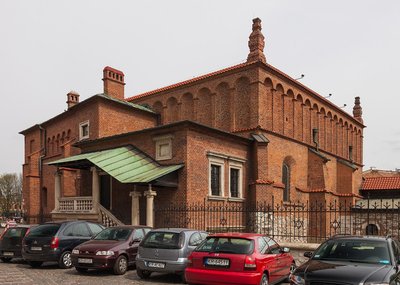
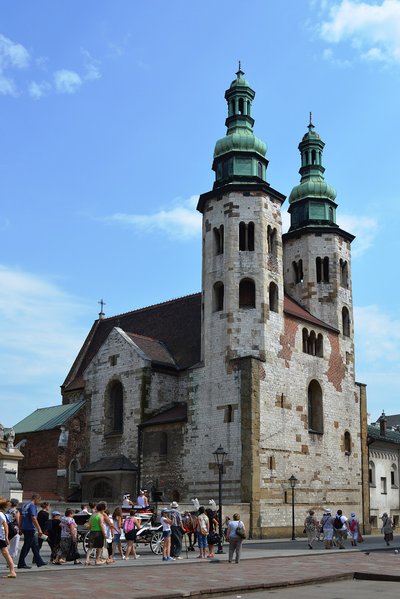
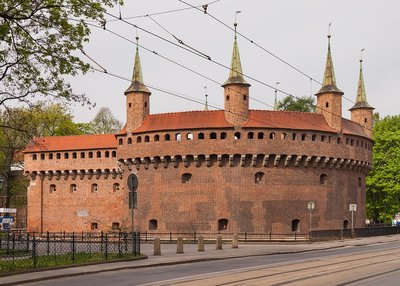
Kraków's oldest surviving architecture dates to the Romanesque period. St. Andrew's Church, built around 1079, is one of the finest Romanesque churches in Poland, its twin-towered facade a rare survival of the city's earliest stone construction. The Barbican, completed around 1499, represents the tail end of medieval military architecture, a circular fortified outpost that once guarded the Floriańska Gate. The Old Synagogue in Kazimierz, rebuilt in the early 16th century but founded earlier, is the oldest surviving synagogue in Poland.
Gothic (14th-15th Century)
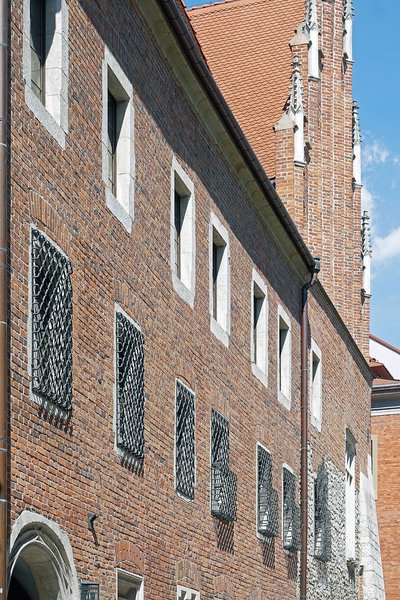
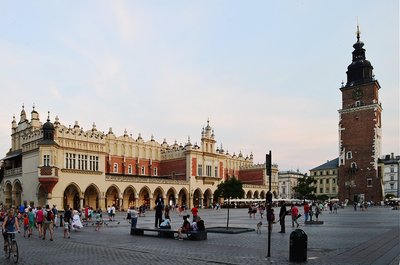
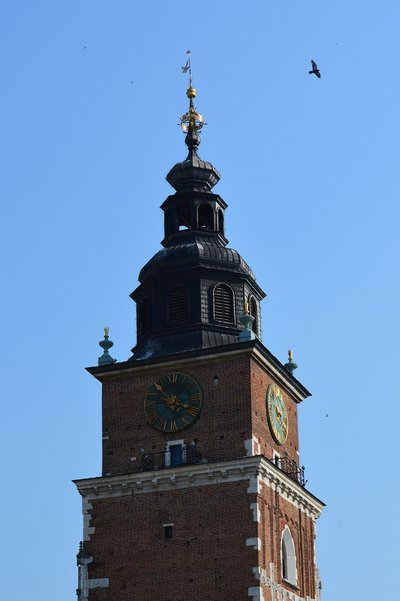
The Gothic period gave Kraków many of its most recognizable landmarks. St. Mary's Basilica dominates the Main Market Square with its asymmetrical towers, the taller of which hosts the famous bugle call sounded every hour. The Cloth Hall, originally a Gothic trading arcade, runs down the center of the square. Wawel Cathedral, burial place of Polish kings, is a Gothic structure encrusted with chapels from every subsequent century. Collegium Maius, the oldest building of the Jagiellonian University, preserves a beautiful Gothic courtyard with arcaded galleries. The Town Hall Tower, all that remains of the original town hall, leans slightly from the vertical, adding to its medieval character.
Renaissance (16th Century)
The Italian Renaissance arrived in Kraków early, brought by Italian architects invited to the royal court. Wawel Castle's Renaissance courtyard, designed by Francesco Fiorentino and Bartolomeo Berecci, is one of the finest examples of Italian Renaissance architecture outside Italy. Its three tiers of arcaded loggias transformed a medieval fortress into a palace worthy of a European power. The Sigismund Chapel at Wawel Cathedral, designed by Berecci, was called "the most beautiful example of the Tuscan Renaissance north of the Alps" and remains a touchstone of Renaissance architecture in Central Europe.
Baroque (17th-18th Century)
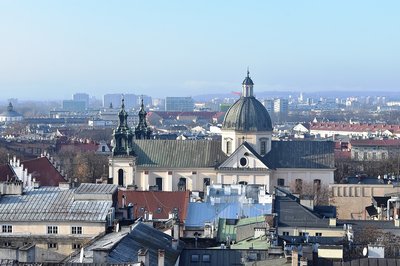
The Baroque era added theatrical grandeur to Kraków's streetscape. St. Peter and Paul Church, the first Baroque building in the city, brought the full drama of Roman Baroque to the Grodzka street with its undulating facade and dynamic interior. Many older churches received Baroque interiors during this period, creating the layered effect visible throughout the Old Town where Gothic shells contain Baroque altars, paintings, and stucco work.
19th Century: Historicism and Secession
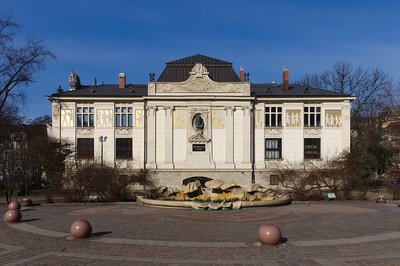
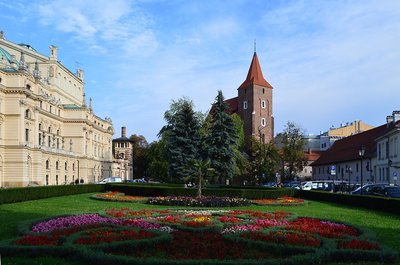
Under Austrian rule as part of Galicia, Kraków enjoyed relative cultural autonomy and a building boom. The Słowacki Theatre, modeled on the Paris Opéra, brought Second Empire grandeur to the city in 1893. The Palace of Art, built for the Society of Friends of Fine Arts, introduced the Vienna Secession style with its ornamental facade and exhibition halls. The National Museum's main building represents the confident institutional architecture of the period.
20th Century and Contemporary
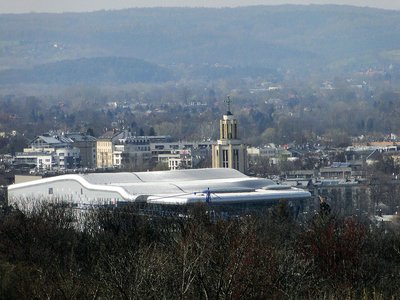
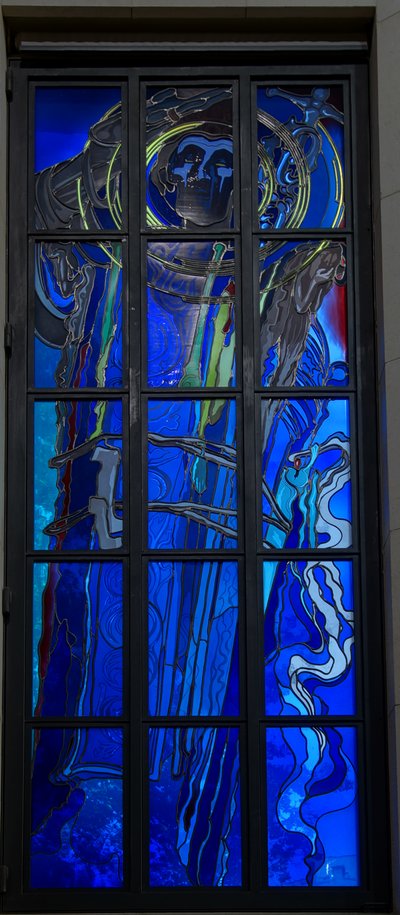
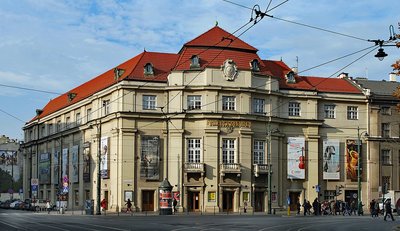
Kraków's modern architectural story includes the Globe House, an early 20th-century commercial building that brought progressive design to the city center, and the Wyspiański Pavilion, a contemporary visitor center that inserts modern glass and steel into the historic fabric. The Kraków Philharmonic represents mid-century institutional design, while the ICE Kraków Congress Centre, completed in 2014, is the city's most ambitious contemporary building: a crystalline glass and steel structure on the Vistula riverbank that holds its own against the historic skyline without competing with it.
Key Neighborhoods
The Old Town (Stare Miasto)
Kraków's Old Town sits within the Planty, a ring of gardens that replaced the medieval walls. The Main Market Square is its heart, surrounded by merchant houses with facades spanning Gothic to Neoclassical. St. Mary's Basilica and the Cloth Hall anchor the square, while streets radiating outward hold churches, university buildings, and palaces at almost every turn. The density of significant architecture here is remarkable even by European standards.
Wawel Hill
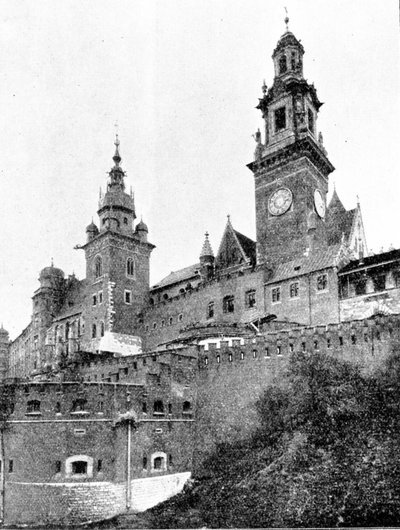
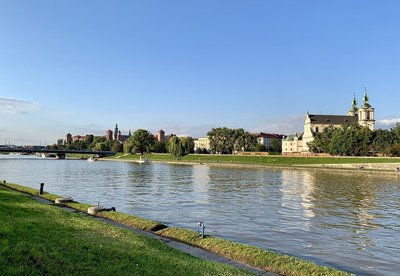
The limestone hill above the Vistula holds Wawel Castle and Wawel Cathedral, the twin symbols of Polish statehood. The hill itself functions as an architectural palimpsest: Romanesque foundations, Gothic walls, Renaissance arcades, Baroque chapels, and Austrian military additions all coexist. Walking the hill is like reading a compressed history of Polish architecture.
Kazimierz
Once a separate town and the center of Jewish life in Kraków, Kazimierz holds a distinct architectural character. The Old Synagogue, Remuh Synagogue, and several other prayer houses survive alongside Catholic churches like Corpus Christi Basilica. The district's architecture reflects both communities, with merchant houses, workshops, and religious buildings creating a fabric quite different from the Old Town's monumental character.
Notable Architects
Bartolomeo Berecci (c. 1480-1537)
The Italian architect and sculptor who created the Sigismund Chapel at Wawel Cathedral and contributed to the castle's Renaissance transformation. Berecci brought Florentine refinement to Poland and established a tradition of Italian-influenced architecture that lasted for generations. His chapel, with its golden dome and carved marble interior, remains one of the most perfect Renaissance spaces in Europe.
Giovanni Battista di Quadro (16th Century)
The Italian architect responsible for the Renaissance remodeling of the Cloth Hall, adding the distinctive attic parapet with its carved masks that still crowns the building. His work transformed a functional trading hall into a civic showpiece.
Jan Zawiejski (1854-1922)
Designed the Słowacki Theatre, one of the most exuberant theatrical buildings in Central Europe. Zawiejski studied the great European opera houses and synthesized their lessons into a building that gave Kraków a cultural monument to match its historical ones.
Franciszek Mączyński (1874-1947)
A leading figure in Kraków's Secessionist and early modern architecture. The Palace of Art and the Globe House represent his range, from decorative Secession to more restrained modernism. Mączyński helped Kraków engage with the progressive architectural movements sweeping through Central Europe at the turn of the century.
What to Notice
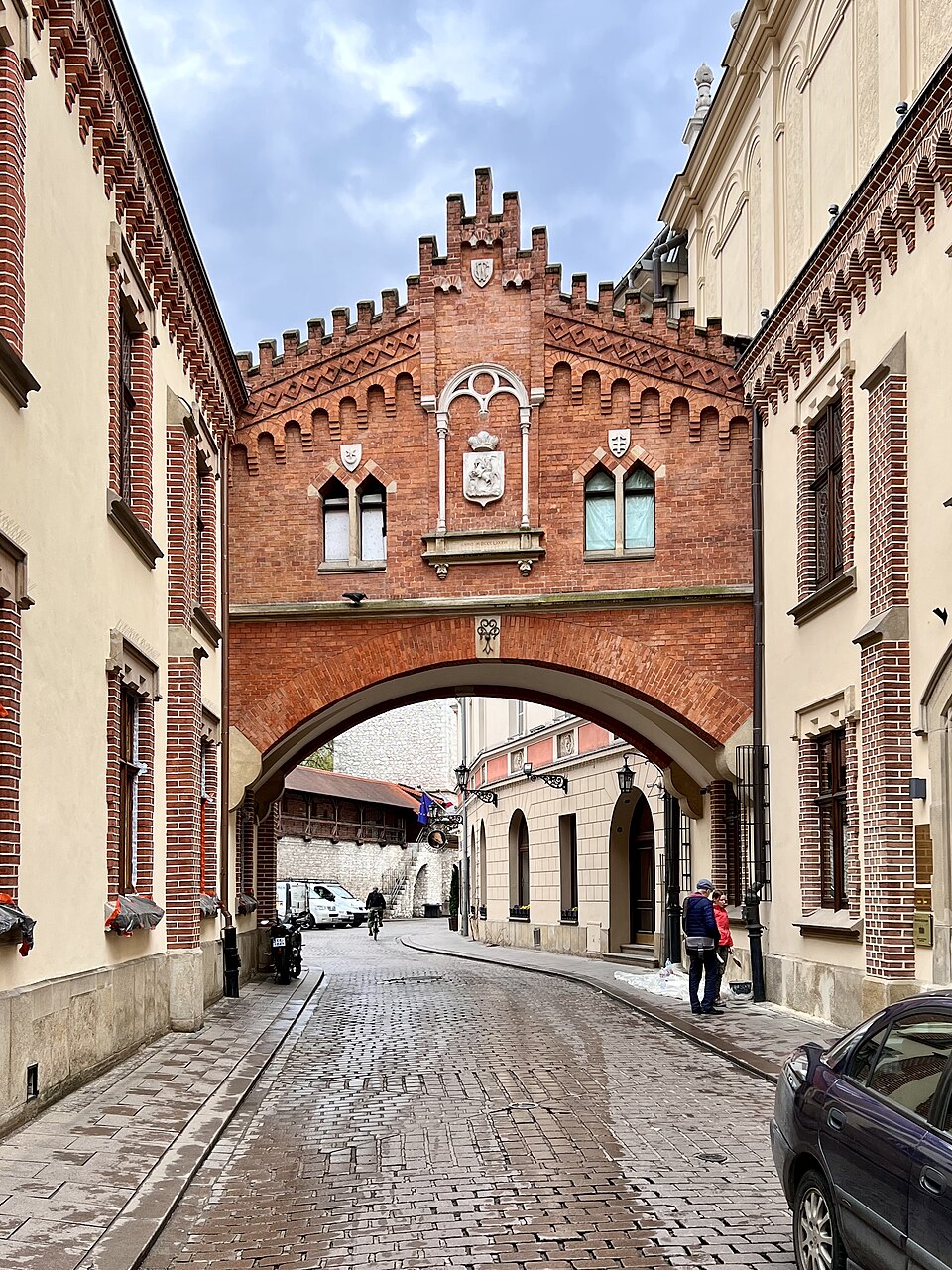
Look at the building materials. Kraków's palette includes the warm limestone of Wawel Hill, red brick in Gothic churches, rendered and painted plaster on merchant houses, and modern glass along the river. The contrast between the rough stone of Romanesque St. Andrew's and the smooth stucco of Baroque St. Peter and Paul, just a few steps apart on Grodzka street, tells the whole story of the city's material evolution.
Pay attention to the portals and doorways. Kraków's Old Town preserves dozens of carved stone portals from the Gothic, Renaissance, and Baroque periods. The entrance to Collegium Maius is particularly fine, but even modest residential buildings often have doorways of unexpected quality. These carved frames were marks of status and taste, and many survive because Kraków's buildings were updated rather than demolished.
Notice the market square's spatial logic. At roughly 200 meters on each side, Kraków's Main Market Square is one of the largest medieval squares in Europe. The Cloth Hall sits in its center, dividing the space into two distinct halves and creating a covered trading street within the open square. This arrangement, with St. Mary's Basilica anchoring one corner and the Town Hall Tower standing slightly off-center, produces a dynamic asymmetry that feels alive rather than rigid.
Watch for the layers. More than most cities, Kraków rewards attention to historical accumulation. A single building might show a Romanesque foundation, Gothic walls, a Renaissance window surround, and a Baroque interior. Wawel Cathedral is the supreme example, its circuit of chapels reading like a catalog of architectural styles from the 14th to the 18th century. Once you start reading the layers, the whole city becomes a history lesson written in stone.