London
London's architectural legacy spans nearly two millennia, from Roman Londinium through medieval guildhalls to contemporary skyscrapers.
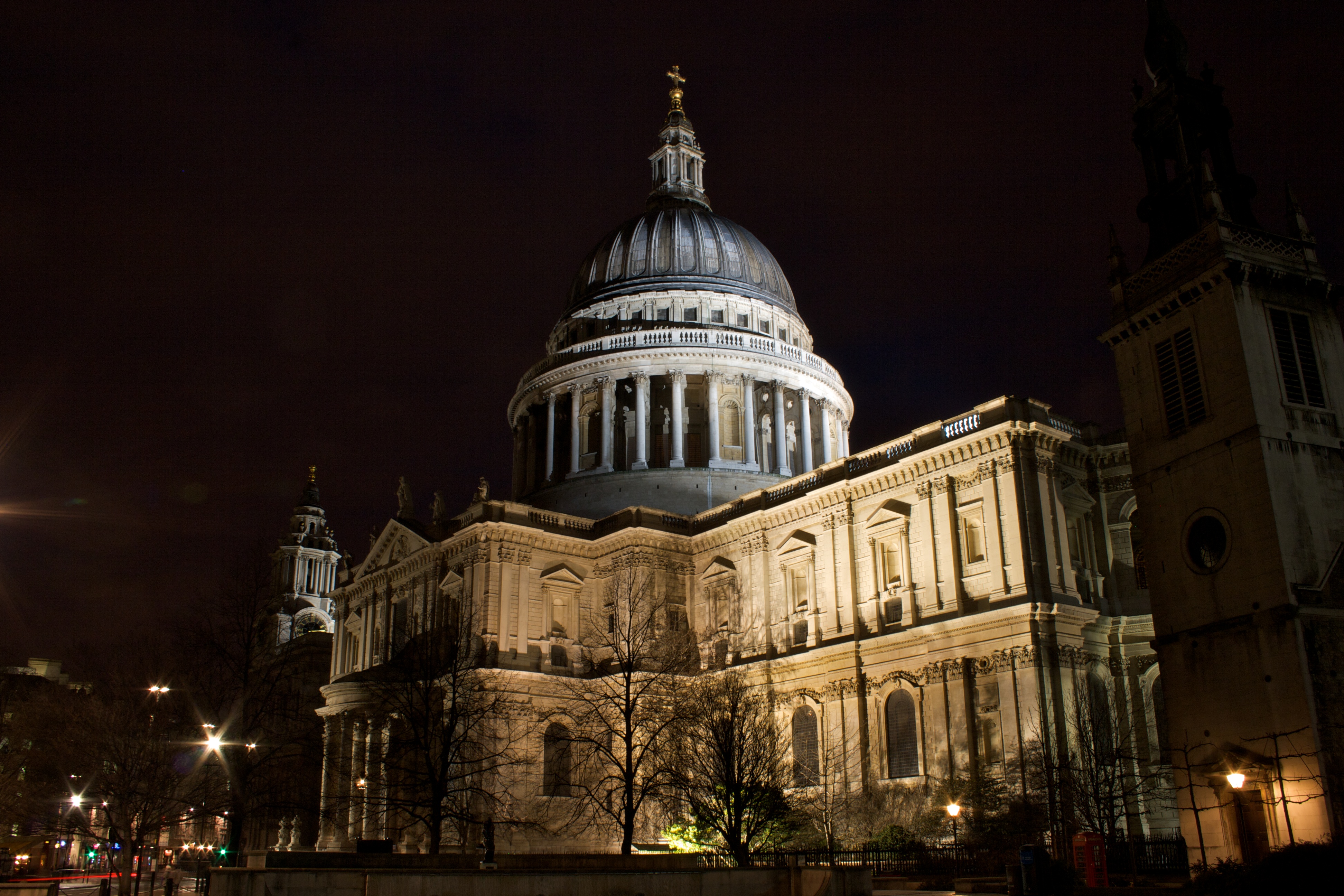
Image: Community Building Analysis
# London — 2000 Years of Architectural Evolution
London's architectural legacy spans nearly two millennia, from Roman Londinium through medieval guildhalls to contemporary skyscrapers. As the capital of the United Kingdom and once the heart of the British Empire, London showcases an unparalleled evolution of architectural styles, each era leaving its distinctive mark on the urban landscape.
## Architectural Periods and Landmarks
### Medieval Foundations (1066-1485)
London's medieval heritage survives in its most formidable structures. The **Tower of London** (1078), built by William the Conqueror, exemplifies Norman military architecture with its massive White Tower and concentric defensive walls. **Westminster Abbey** (1245-1269), rebuilt by Henry III, represents the pinnacle of English Gothic architecture with its soaring nave, intricate stone tracery, and the magnificent Henry VII Chapel showcasing Perpendicular Gothic fan vaulting.
### Wren's Baroque Revival (1666-1723)
The Great Fire of 1666 provided Christopher Wren with an unprecedented opportunity to rebuild London. His masterpiece, **St. Paul's Cathedral** (1675-1710), dominates the City skyline with its iconic 365-foot dome—one of the largest cathedral domes in the world. Wren's English Baroque style, blending classical proportions with dramatic verticality, established a template that influenced ecclesiastical architecture across the British Empire.
### Georgian Elegance (1714-1837)
The Georgian era brought systematic urban planning and neoclassical grandeur. Robert Smirke's **British Museum** (1823-1850) exemplifies Greek Revival architecture with its magnificent Ionic colonnade—the longest in London—and Sir Richard Westmacott's sculptural pediment depicting "The Progress of Civilisation." This period established London as a city of squares, crescents, and palatial institutional buildings.
### Victorian Engineering and Revival (1837-1901)
The Victorian era saw London embrace both technological innovation and architectural revivalism. The **Palace of Westminster** (1840-1876), designed by Charles Barry and Augustus Pugin after the 1834 fire, represents Gothic Revival at its most magnificent. With its three iconic towers—Victoria Tower, Elizabeth Tower (Big Ben), and the Central Tower—it created a new template for parliamentary architecture worldwide.
The **Natural History Museum** (1873-1881) by Alfred Waterhouse demonstrates Romanesque Revival applied to public architecture. Its terracotta facade, adorned with carved flora and fauna, turns the building itself into a celebration of natural history, while its soaring Central Hall creates a cathedral-like space for learning and wonder.
### 20th Century Innovation
London's architectural evolution continued with groundbreaking modern movements. **Tate Modern** (2000), Herzog & de Meuron's conversion of the 1947 Bankside Power Station, exemplifies industrial heritage transformation. The preservation of Giles Gilbert Scott's imposing brick structure, combined with contemporary interventions like the glass "light beam" extension, demonstrates how historic buildings can gain new life through sensitive adaptation.
The **Lloyd's Building** (1978-1986) by Richard Rogers pioneered High-Tech architecture with its radical "inside-out" design. By placing all mechanical services—elevators, stairs, and utilities—on the exterior, Rogers created flexible interior spaces while celebrating the building's functional elements as architectural features. This approach influenced commercial architecture globally and established London as a center of architectural innovation.
## Architectural Significance
London's architecture tells the story of Britain's political, religious, and cultural evolution. From the defensive strategies embodied in the Tower of London's medieval fortifications to the democratic ideals expressed in Westminster's Gothic Revival grandeur, each building reflects the values and aspirations of its era.
The city's architectural diversity—Norman keeps, Wren's baroque churches, Georgian terraces, Victorian stations, and contemporary towers—creates a layered urban fabric where centuries of building traditions coexist. This architectural palimpsest makes London unique among world capitals, offering visitors a comprehensive journey through Western architectural history.
## Contemporary Relevance
Today, London continues to evolve architecturally while respecting its historic character. The success of projects like Tate Modern's conversion demonstrates how contemporary architecture can enhance rather than replace historic structures. Similarly, the careful preservation of buildings like St. Paul's Cathedral and Westminster Abbey ensures that future generations can experience the architectural achievements that define London's character.
Whether exploring the medieval stones of Westminster Abbey, marveling at Wren's baroque masterpieces, or experiencing Rogers's High-Tech innovations, visitors to London encounter an architectural legacy that has influenced building traditions across the globe—a living museum of human creativity and craftsmanship spanning nearly a thousand years.
Notable Buildings in London
Explore 9 analyzed buildings spanning 12 architectural styles

Romanesque
Victorian
Natural History Museum
Cromwell Road, South Kensington

High-Tech
Lloyd's Building
1 Lime Street, London EC3M 7HA

Brutalism
Industrial
Contemporary
Tate Modern
Bankside, London SE1 9TG

Neoclassical
Beaux-Arts
British Museum
Great Russell Street, Bloomsbury

Gothic
Victorian
Palace of Westminster
Westminster, London SW1A 0AA

Gothic
Romanesque Revival
Westminster Abbey
20 Deans Yard, Westminster

Romanesque
Gothic
Tower of London
Tower of London, London EC3N 4AB

Baroque
Neoclassical
St Paul's Cathedral
St Paul's Churchyard, London EC4M 8AD
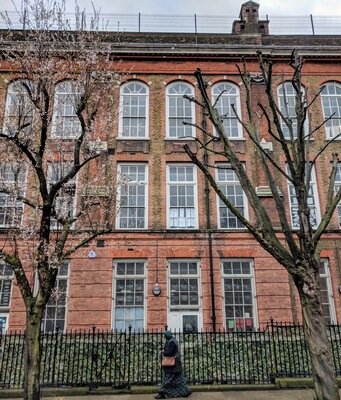
Modernism
7 Rhyl St London
📬 Get notified when we add more buildings
Be the first to know when new architectural analyses are added to London.