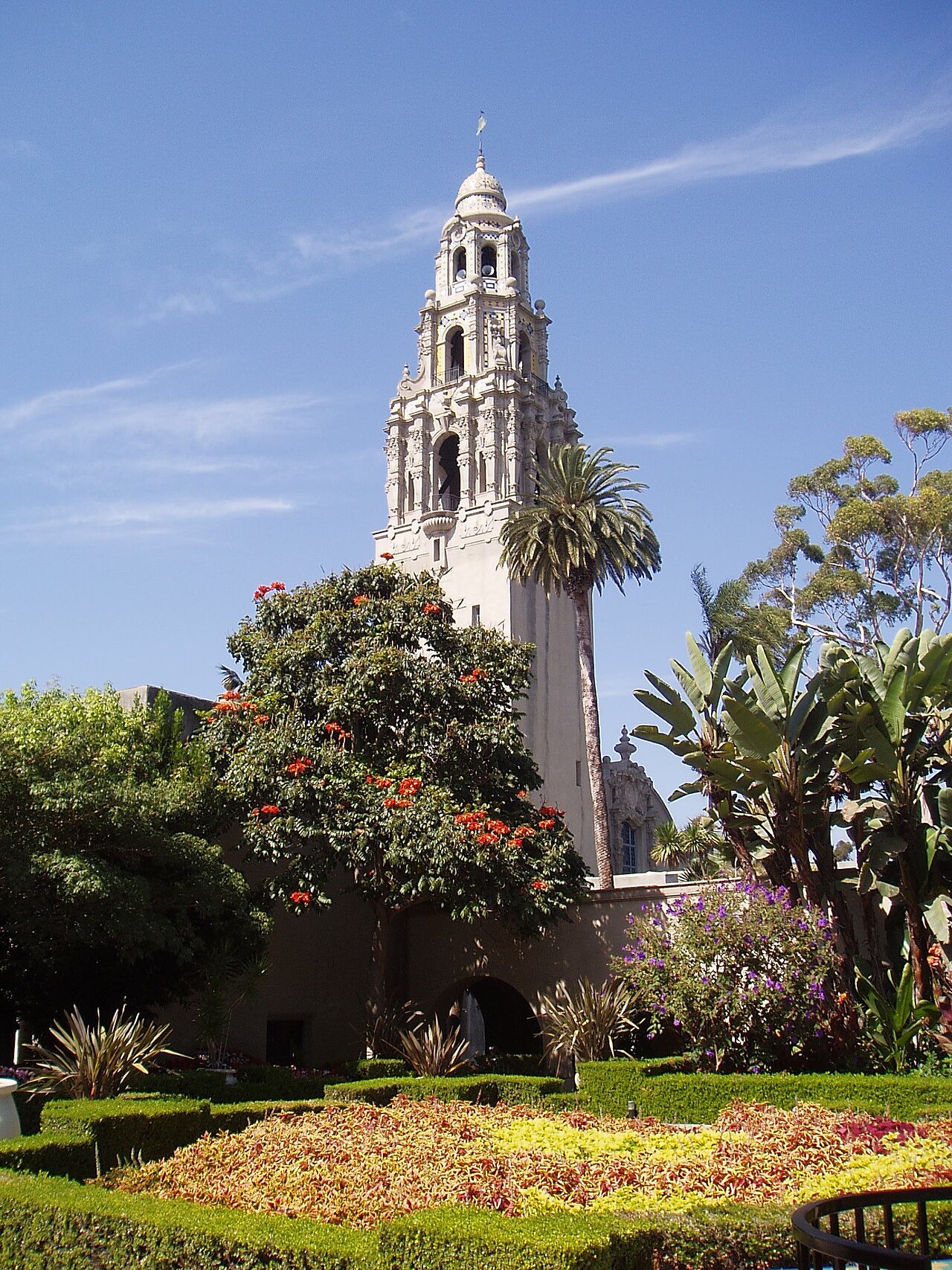
San Diego's architectural landscape tells the story of California itself—from Spanish colonial missions to contemporary innovation, each era leaving its distinctive mark on the city's skyline. Founded as California's first European settlement, San Diego has evolved into a sophisticated metropolis that celebrates its heritage while embracing bold modernist visions, creating one of America's most architecturally diverse cities.
The city's unique position at the crossroads of Spanish colonial tradition and American innovation has produced a built environment unlike anywhere else in the country. From the ornate Spanish Colonial Revival splendor of Balboa Park to the stark concrete poetry of Louis Kahn's Salk Institute, San Diego's buildings reflect both deep historical roots and forward-thinking design philosophy. The year-round temperate climate has encouraged architects to explore indoor-outdoor living concepts that blur the boundaries between interior and exterior space.
What makes San Diego's architecture particularly compelling is how seamlessly different periods and styles coexist. Victorian commercial buildings in the Gaslamp Quarter stand just blocks from cutting-edge contemporary structures downtown, while the Spanish Colonial Revival legacy permeates everything from civic buildings to neighborhood churches. This architectural diversity reflects the city's evolution from frontier outpost to naval hub to modern tech center.
Architectural Timeline
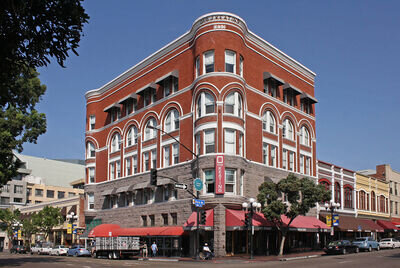
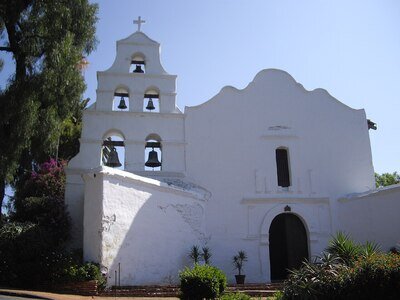
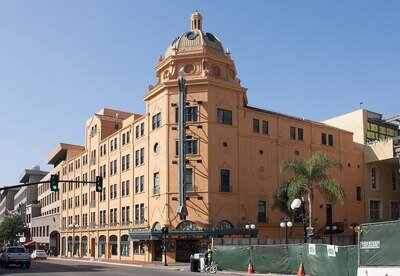
San Diego's architectural story begins with Mission San Diego de Alcalá, founded in 1769 as California's first mission. The simple adobe construction and red tile roofs established a design vocabulary that would resurface centuries later in the Spanish Colonial Revival movement. The Victorian era brought ornate commercial buildings to downtown, exemplified by the elaborate cornices and bay windows of the Gaslamp Quarter's preserved streetscapes.
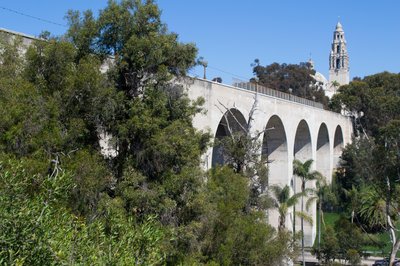
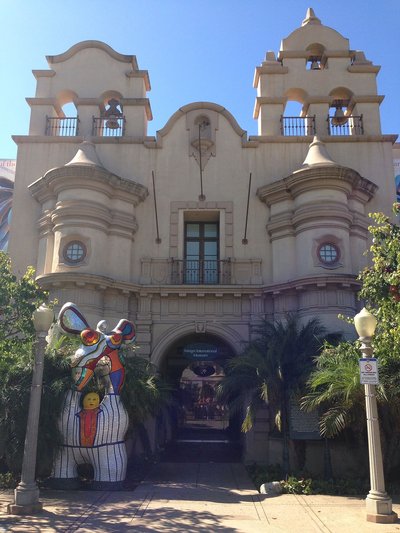
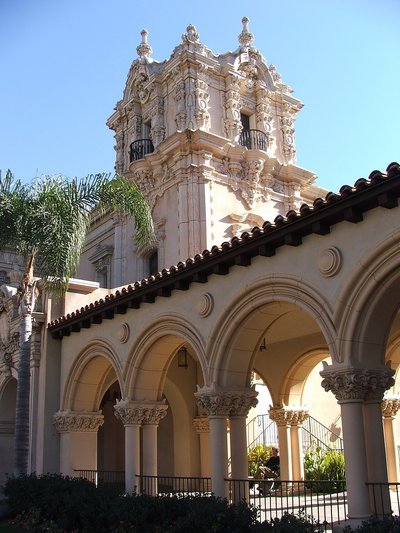
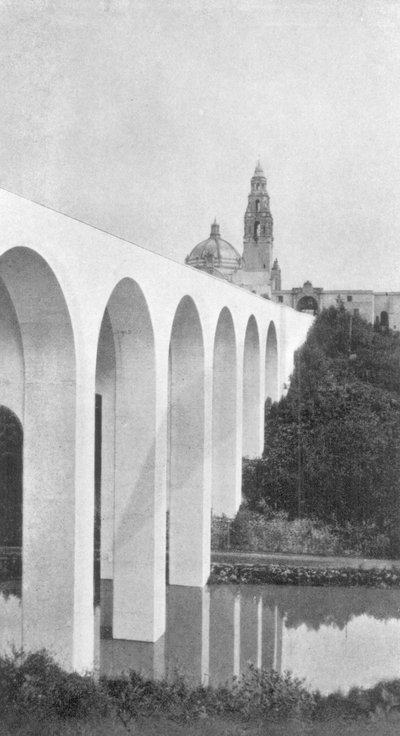
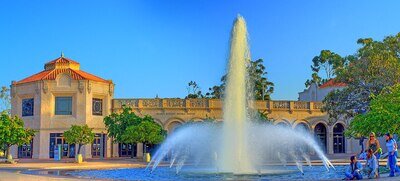
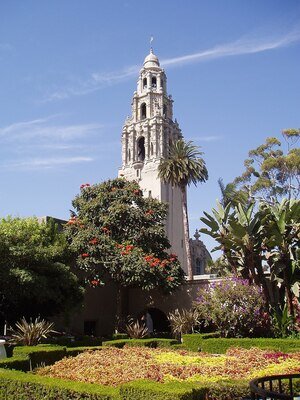
The 1915 Panama-California Exposition in Balboa Park marked a pivotal moment, as architect Bertram Goodhue created a fantasy of Spanish Colonial Revival architecture that would influence Southern California design for generations. His California Building, with its ornate Churrigueresque details and soaring bell tower, became the template for a regional style that married Spanish romance with American ambition.
The mid-20th century brought modernist innovation, notably Louis Kahn's Salk Institute in La Jolla, where precise concrete forms frame views of the Pacific Ocean. This period also saw the rise of climate-responsive architecture that took advantage of San Diego's mild weather, creating buildings that lived as much outdoors as in.
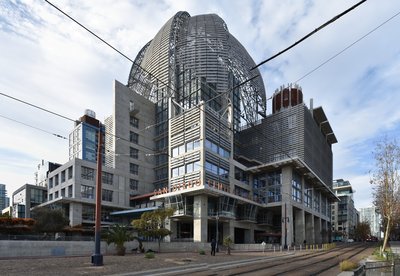
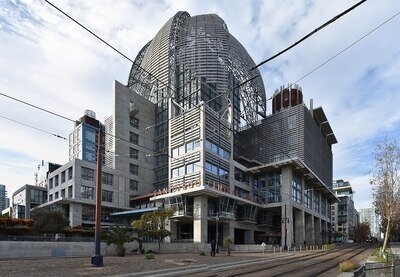
Contemporary San Diego architecture has embraced both sustainability and technological innovation. From Rob Wellington Quigley's contextual approach to library design to cutting-edge waterfront developments, today's architects continue the city's tradition of architectural experimentation while respecting its historical character.
Key Neighborhoods
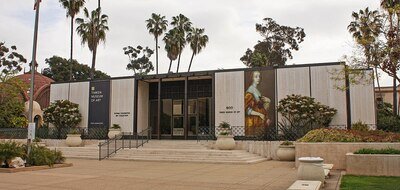
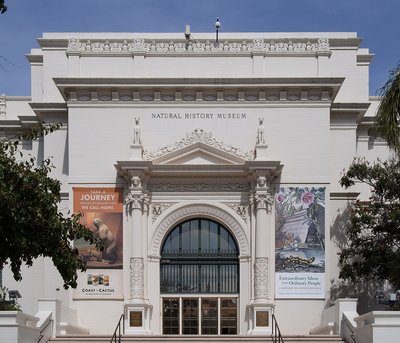
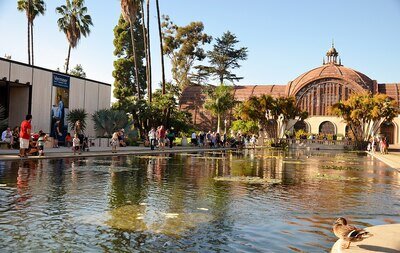
Balboa Park stands as San Diego's architectural crown jewel, where Bertram Goodhue's vision of Spanish Colonial Revival grandeur created an entire district of fantasy architecture. The park's buildings, from the California Building to the various museums, showcase elaborate Plateresque ornament, decorative tiles, and theatrical compositions that transformed a scruffy mesa into one of America's most romantic architectural ensembles.
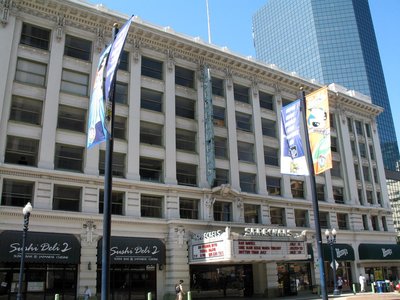
Downtown's Gaslamp Quarter preserves San Diego's Victorian commercial heritage in a concentrated 16-block district. Buildings like the Keating Building and Yuma Building display the elaborate brick and cast-iron facades that once lined the city's main commercial streets. These structures, saved from demolition in the 1970s, now house restaurants and shops that give contemporary life to 19th-century architecture.
La Jolla represents San Diego's intersection with modernist innovation. Beyond the famous Salk Institute, the area features mid-century residential architecture that takes full advantage of dramatic coastal sites. The University of California San Diego campus, including William Pereira's Brutalist Geisel Library, demonstrates how bold architectural forms can complement rather than compete with natural beauty.
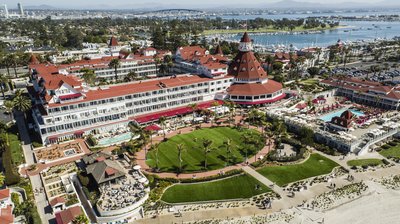
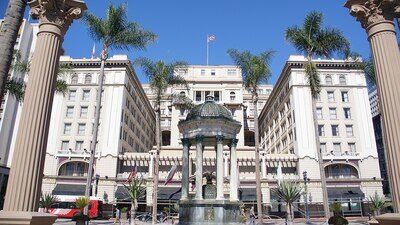
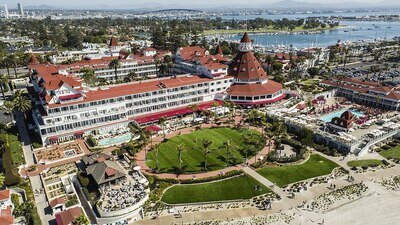
Coronado showcases resort architecture at its most romantic. The Hotel del Coronado, with its white wooden towers and red conical roofs, established a template for California beach architecture that influenced resort design across the American West. The island setting allows the hotel's Victorian fantasy to play out against endless Pacific horizons.
Notable Architects
Bertram Goodhue transformed San Diego's architectural identity through his work on the 1915 Panama-California Exposition. His California Building and other Balboa Park structures created a Spanish Colonial Revival vocabulary that became synonymous with Southern California romanticism. Goodhue's genius lay in adapting historical Spanish and Mexican precedents to American sensibilities and modern construction techniques.
Irving Gill pioneered modernist architecture in San Diego during the 1910s and 1920s, stripping away ornament to reveal pure geometric forms that anticipated the International Style by decades. His houses and civic buildings demonstrated how progressive design could work within Southern California's climate and lifestyle, influencing generations of West Coast architects.
Louis Kahn's Salk Institute stands as one of the 20th century's most profound architectural achievements. Kahn created a temple to scientific research where precise concrete forms frame infinite ocean views, demonstrating how modern materials and methods could achieve the same spiritual power as ancient architecture. The building's influence on contemporary institutional design cannot be overstated.
Rob Wellington Quigley represents San Diego's contemporary architectural scene with buildings that respect urban context while exploring new formal possibilities. His Central Library downtown demonstrates how contemporary architecture can honor a city's character while meeting 21st-century functional requirements, creating public spaces that feel both timeless and thoroughly modern.
What to Notice
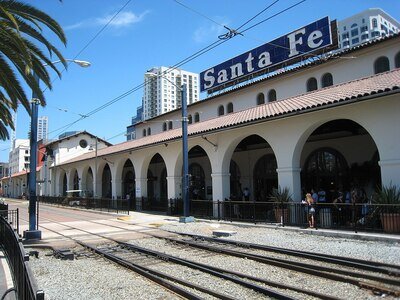
San Diego's architecture reflects the city's unique climate through extensive use of outdoor spaces, courtyards, and covered walkways that blur the distinction between inside and outside. Notice how even formal civic buildings incorporate loggias, terraces, and garden courts that would be impractical in harsher climates. This indoor-outdoor integration extends from Spanish Colonial Revival arcades to contemporary glass pavilions.
Materials tell the story of regional adaptation and evolution. Early adobe construction gave way to brick and cast iron during the Victorian era, then to steel and concrete in the modern period. Contemporary buildings often combine these materials in sophisticated ways—concrete and glass paired with traditional tile roofs, or steel frames supporting time-honored stucco walls.
The Spanish influence appears not just in obvious Revival-style buildings but in subtle details throughout the city: red tile roofs on otherwise modern structures, stucco walls that recall adobe construction, and decorative ironwork that echoes colonial-era craftsmanship. This architectural DNA persists even in buildings that make no attempt at historical mimicry.
Urban planning reveals San Diego's evolution from Spanish colonial grid to American sprawl to contemporary smart growth. Downtown's traditional street pattern contrasts with the curvilinear subdivisions of post-war neighborhoods, while newer development attempts to recapture walkable urban density. The relationship between buildings and landscape—whether natural canyons or designed gardens—remains a constant theme in San Diego's architectural story.