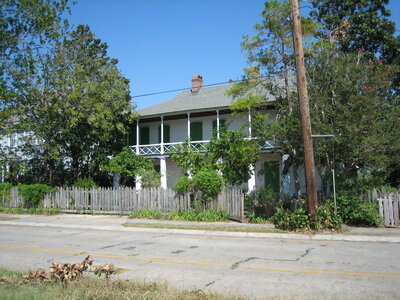
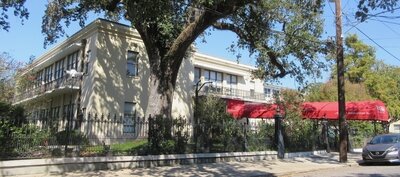
New Orleans is one of America's most architecturally distinctive cities — a living museum where three centuries of building traditions layer atop one another in a humid subtropical landscape unlike anywhere else on the continent. Founded by the French in 1718, shaped by Spanish colonial rule, and enriched by Caribbean, African, and Anglo-American influences, the city's built environment tells a story of cultural collision and creative adaptation that no other American city can match.
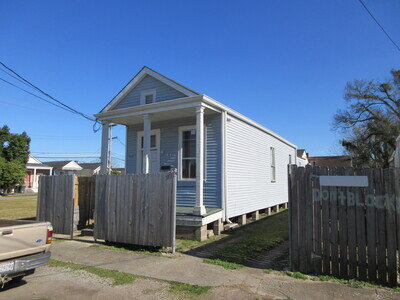
The French Quarter (Vieux Carré) is paradoxically more Spanish than French — devastating fires in 1788 and 1794 destroyed most French Colonial structures, and the Spanish rebuilt with thick-walled brick buildings, interior courtyards, and the iconic cast-iron galleries that now define the neighborhood. Walk a few blocks to Esplanade Avenue or the Faubourg Marigny and the architectural vocabulary shifts to Creole cottages and shotgun houses — narrow, deep dwellings perfectly adapted to the city's long, thin lots and oppressive heat. Cross Canal Street into the Garden District and you enter a different world entirely: grand Greek Revival and Italianate mansions built by wealthy Americans who settled upriver from the Creole old guard after the Louisiana Purchase.
Explore buildings spanning French Colonial, Spanish Colonial, Creole, Greek Revival, Second Empire, Beaux-Arts, Art Deco, and Contemporary styles — from Jackson Square landmarks that every visitor photographs to hidden gems that locals cherish.
French Quarter & Jackson Square
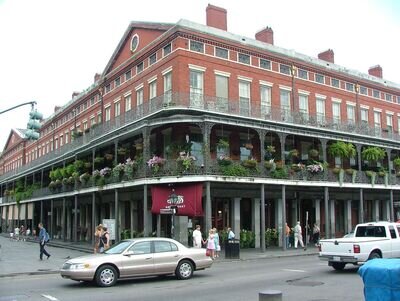
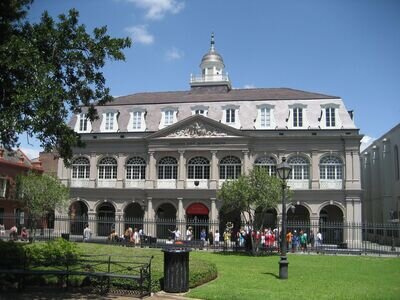
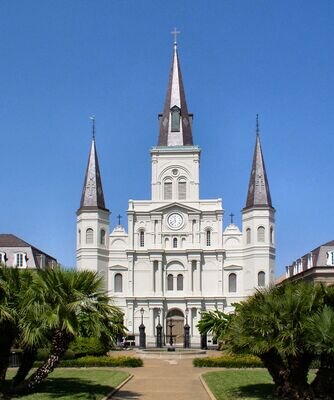
The heart of New Orleans architecture begins at Jackson Square, where three of the city's most important buildings stand side by side: the St. Louis Cathedral (1794), the Cabildo (1799), and the Pontalba Buildings (1851). Together they form one of the most photographed architectural ensembles in America, blending Spanish Colonial grandeur with French sensibility and the first significant use of cast-iron galleries in the city.
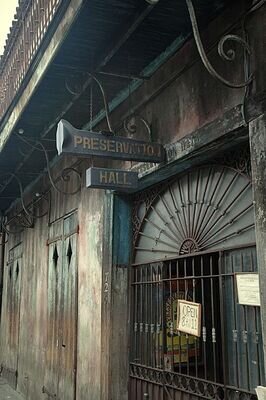
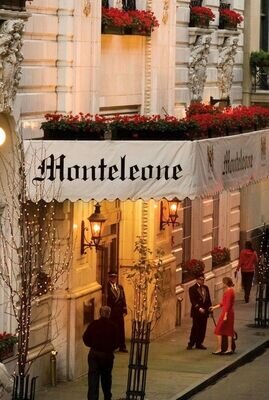
Just steps away, the Hotel Monteleone (1886) rises on Royal Street as a Beaux-Arts landmark that has hosted literary giants from Faulkner to Hemingway. And tucked on St. Peter Street, Preservation Hall occupies a humble Creole cottage from around 1817 — proof that great architecture doesn't always announce itself.
Garden District & Uptown
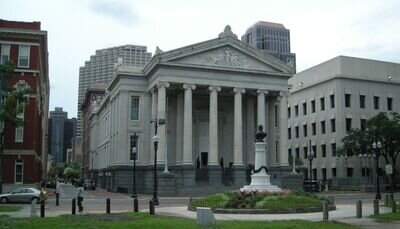
Cross Canal Street and the architectural story changes dramatically. The Garden District was developed in the 1830s–1860s by Anglo-American newcomers who built sprawling mansions to rival anything in the French Quarter. Gallier Hall (1853) on St. Charles Avenue represents the pinnacle of Greek Revival civic architecture in the South — designed by James Gallier Sr., it served as New Orleans' city hall for over a century.
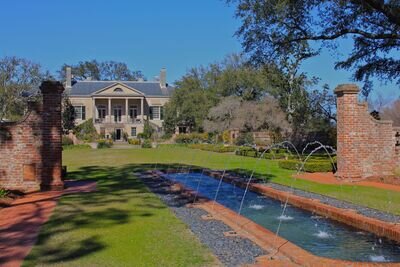
The Bradish Johnson House (1872), now the Louise S. McGehee School on Prytania Street, showcases the Second Empire style with its distinctive mansard roof — a rare style in New Orleans designed by architect James Freret. Nearby, Longue Vue House (1942) is a hidden gem: a Classical Revival estate with stunning gardens, offering a glimpse into mid-century New Orleans wealth.
Bayou St. John, Esplanade & Mid-City
The neighborhoods radiating from Bayou St. John preserve some of New Orleans' oldest architectural traditions. The Pitot House (1799) on Moss Street is the only French Colonial–style Creole colonial house open to the public in New Orleans — a raised cottage with wide galleries and a West Indian influence that predates the American period.
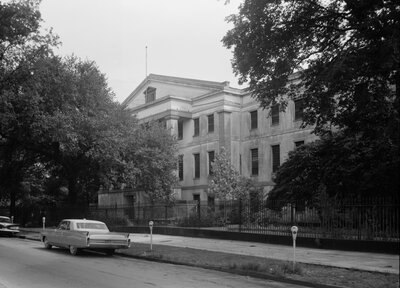
On Esplanade Avenue, the Old U.S. Mint (1838) stands as a massive Greek Revival monument designed by William Strickland — the only mint in American history to produce both United States and Confederate currency.
Canal Street, Warehouse District & City Park
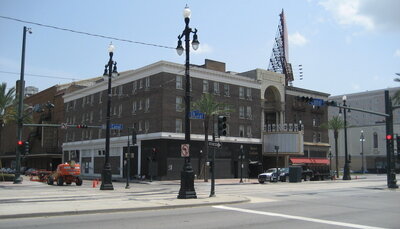
Canal Street was once America's widest boulevard and the dividing line between Creole and American New Orleans. The Saenger Theatre (1927) is an atmospheric theater masterpiece — its interior recreates a starlit Italian courtyard, complete with projected clouds drifting across the ceiling.
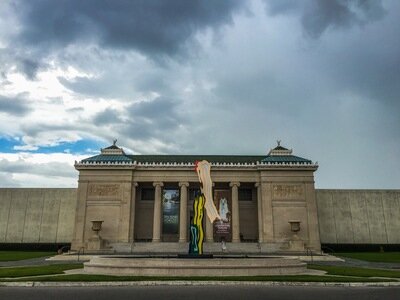
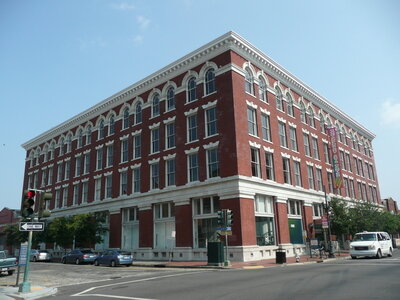
In the Warehouse District, the Contemporary Arts Center (1905/1990) represents adaptive reuse at its best — a K&B warehouse transformed into one of the South's premier contemporary art spaces. And in City Park, the New Orleans Museum of Art (1911) anchors the park with Beaux-Arts classicism.
The iconic shotgun house represents perhaps New Orleans' most important architectural contribution to American building — a narrow, deep house type with rooms arranged in a straight line, no hallways, adapted from Caribbean and West African building traditions.