Monterey stands as California's most historically layered city, a place where Spanish colonial adobes share streets with Victorian commercial buildings, repurposed sardine canneries, and stately military architecture. As the former capital of both Spanish and Mexican California, Monterey's built environment records every chapter of the state's founding story in stone, adobe, and timber.
What makes Monterey's architecture remarkable is its concentration. Within a few walkable blocks of downtown, you can trace the entire arc of California's colonial and early American history through buildings that remain largely intact. The Monterey State Historic Park preserves one of the densest collections of pre-statehood buildings anywhere on the Pacific Coast. These are not reconstructions or museum pieces. They are working buildings that have been continuously occupied, adapted, and cherished for generations.
The city's relationship with the Pacific Ocean has shaped its architecture as profoundly as any stylistic movement. From the industrial canneries that John Steinbeck immortalized to the Monterey Bay Aquarium that transformed one of those very buildings into a world-class institution, the waterfront tells a story of reinvention. Military installations, too, have contributed grand Spanish Colonial Revival structures that anchor the eastern edge of the city.
Architectural Periods
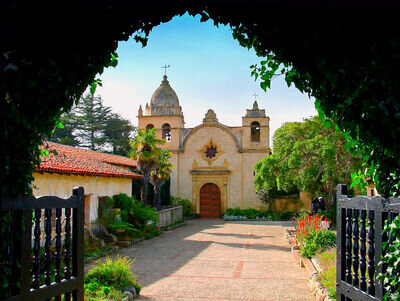
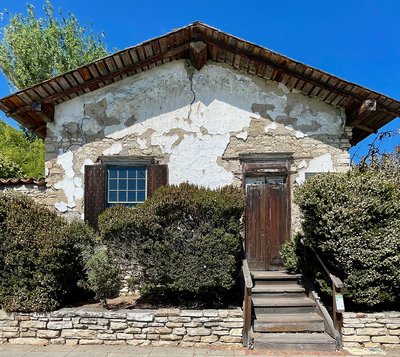
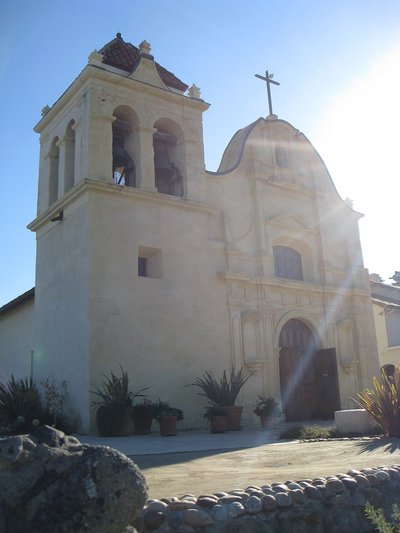
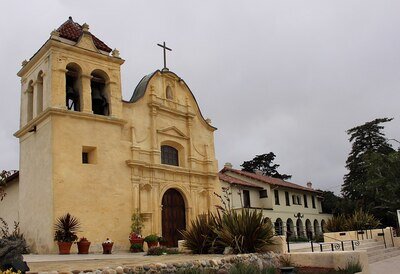
Monterey's earliest surviving buildings date to the Spanish colonial period, when thick adobe walls, red clay tile roofs, and deep-set windows defined a building tradition adapted to California's mild climate. The Royal Presidio Chapel, founded in 1770, represents the oldest continuously operating parish in California and preserves the simple geometry and devotional proportions of mission-era construction.
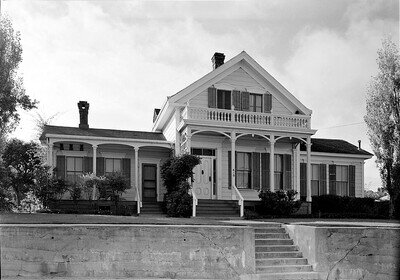
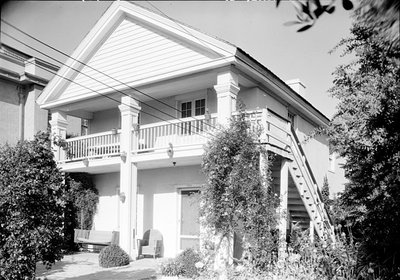
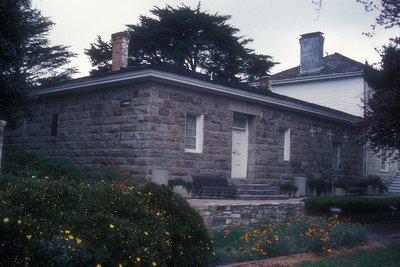
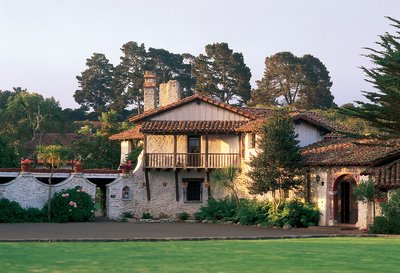
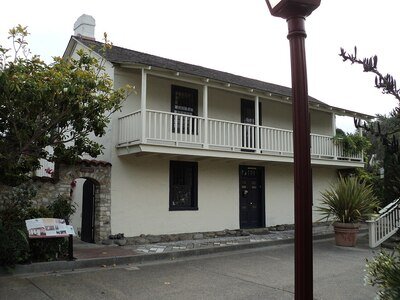
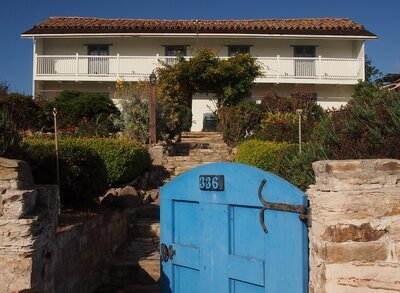
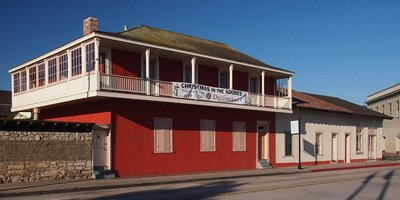
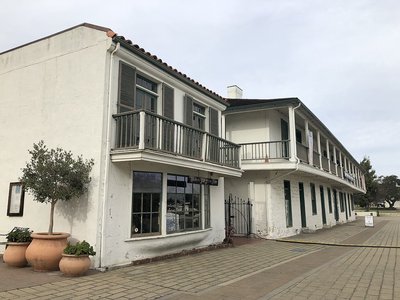
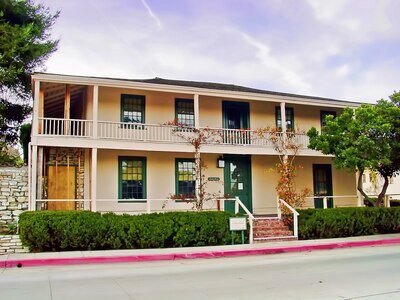
The Mexican and early American periods produced what architectural historians call the "Monterey Colonial" style, a hybrid form that merged adobe construction with New England building traditions. Thomas Oliver Larkin, the first American consul to California, built a house that combined a traditional adobe ground floor with a second-story wooden balcony wrapped around the exterior. The Larkin House became so influential that architectural historians named an entire regional style after it. You can see the formula repeated across downtown in buildings like the Custom House and the Cooper-Molera Adobe.
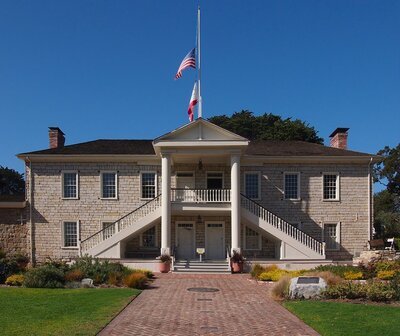
The Victorian era brought new materials and ambitions to Monterey. Brick, cast iron, and milled lumber replaced adobe as the city modernized. Colton Hall, where California's first constitutional convention met in 1849, shows how American civic aspirations translated into Greek Revival formality even on the western frontier.
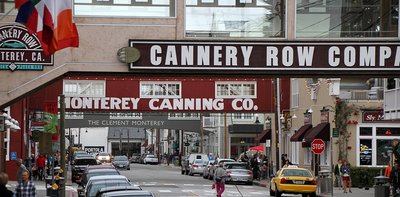
The early twentieth century saw the rise of Cannery Row's industrial vernacular, where function dictated form in corrugated metal buildings designed to process sardines as efficiently as possible. When the sardines disappeared in the 1950s, these buildings entered a long decline before their dramatic reinvention as shops, restaurants, and the world-renowned Monterey Bay Aquarium.
Key Districts
Monterey State Historic Park
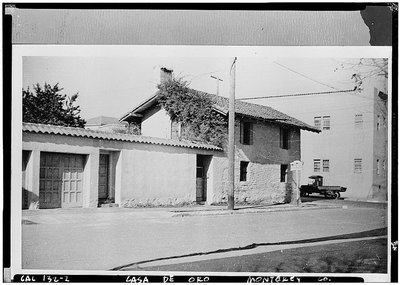
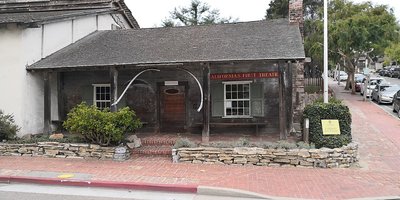
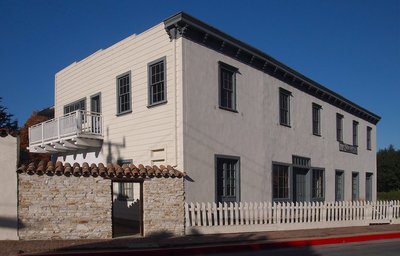
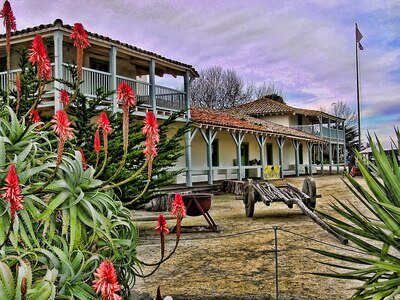
The heart of Monterey's architectural heritage stretches along the Path of History, a walking trail that connects more than twenty historic buildings within a compact downtown area. Custom House Plaza anchors the waterfront end, where California's oldest government building still stands. Moving inland, you pass through a remarkable sequence of adobes, each telling a different story: the Stevenson House where Robert Louis Stevenson briefly lived, the Pacific House that served as a military storehouse and courthouse, and the Casa Soberanes with its distinctive garden wall.
Cannery Row
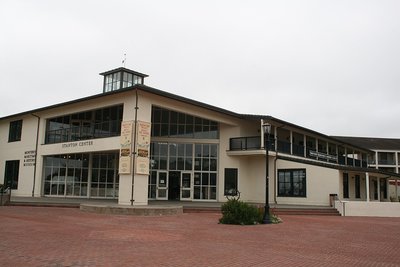
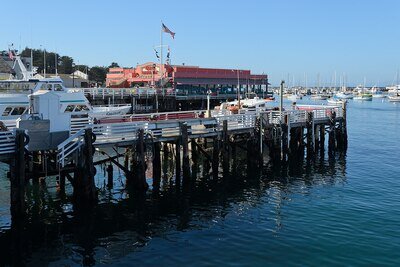
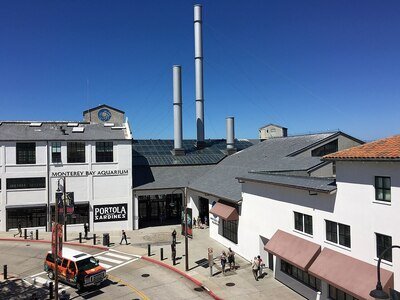
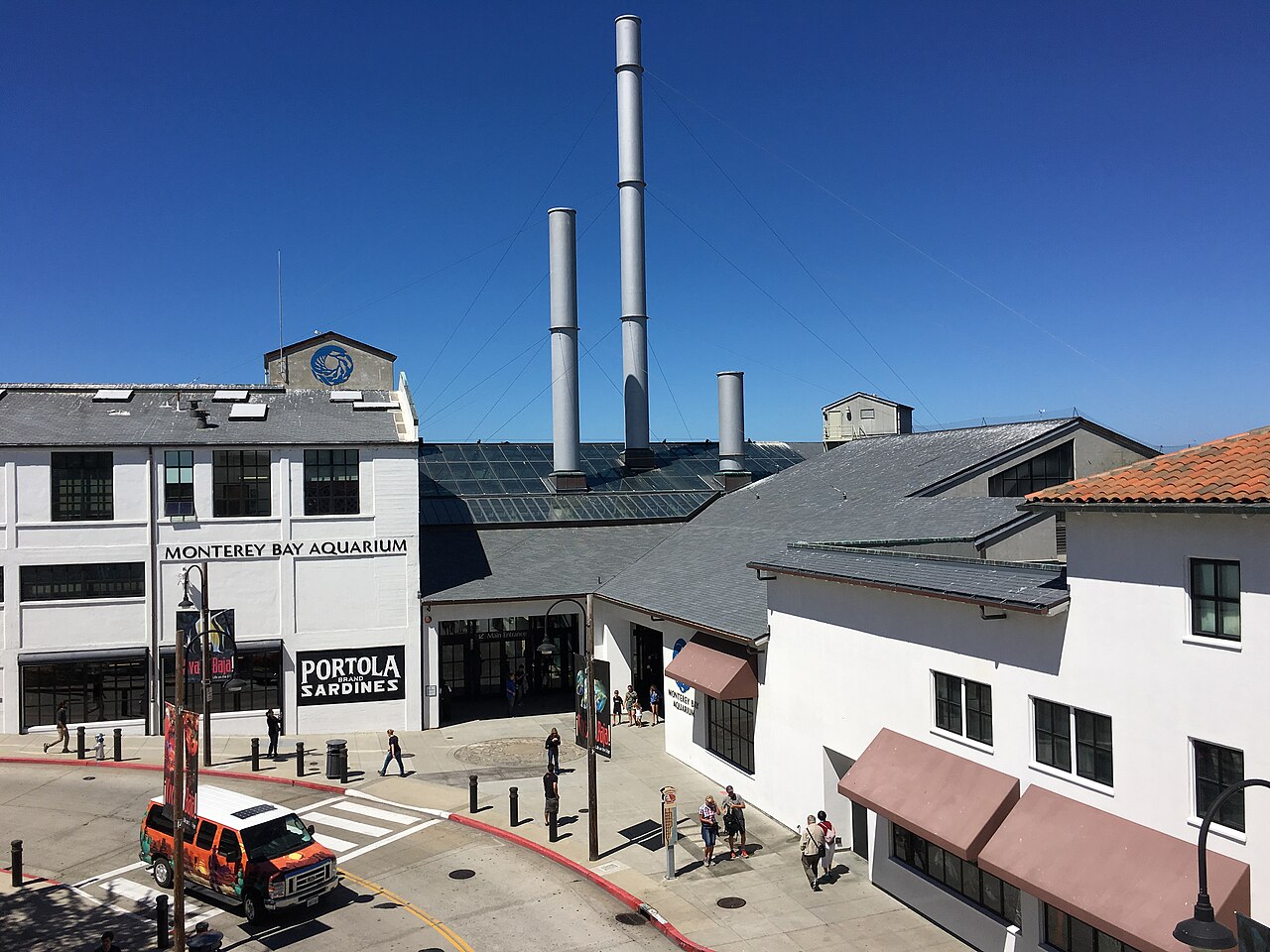
Once the center of California's sardine industry, Cannery Row's industrial buildings have been transformed into one of the state's most visited waterfront districts. The architecture here is fundamentally practical: metal-clad warehouses, processing plants with oversized loading doors, and workers' housing scaled to modest budgets. The Monterey Bay Aquarium occupies the former Hovden Cannery at the north end, preserving the industrial shell while inserting a sophisticated modern interior.
The Presidio
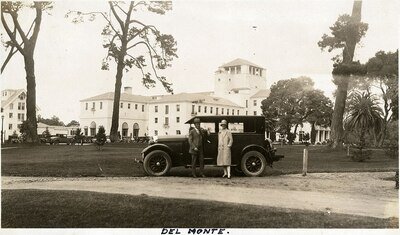
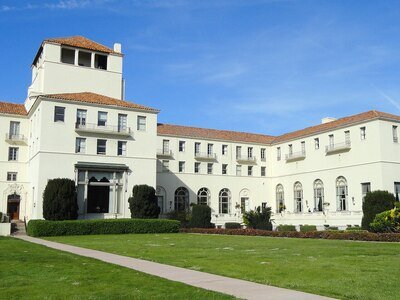
The Presidio of Monterey occupies a hill overlooking the harbor, where Spanish soldiers first established a military outpost in 1770. Today the installation is home to the Defense Language Institute, housed in a collection of buildings spanning military architectural history from the early twentieth century forward. Herrmann Hall, originally built as the Hotel Del Monte, is a grand Spanish Colonial Revival structure that anchors the Naval Postgraduate School campus.
Notable Architects and Builders
Thomas Oliver Larkin arrived in Monterey in 1832 and, through his own house, invented a regional architectural style. The "Monterey Colonial" approach he pioneered blended the thick adobe walls familiar to local builders with the wrap-around wooden balconies and hip roofs he remembered from his New England childhood. His synthesis proved so successful that it became the default building pattern for prosperous Californians through the 1840s and was later revived as a conscious design choice in the twentieth century.
Albert Farr, a San Francisco architect, designed the original Hotel Del Monte (now Herrmann Hall) in 1926 after fire destroyed the previous Victorian hotel. His Spanish Colonial Revival design, with its stucco walls, terra cotta ornament, and red tile roofing, deliberately connected the modern resort to Monterey's colonial past while providing luxurious accommodations for wealthy visitors.
The transformation of Cannery Row owes much to the architectural vision behind the Monterey Bay Aquarium, designed by Esherick Homsey Dodge and Davis in 1984. Their decision to preserve the industrial character of the Hovden Cannery while creating dramatic interior spaces for marine exhibits set the standard for adaptive reuse on the entire waterfront.
What to Notice
Adobe construction dominates Monterey's oldest buildings, and it rewards close attention. Look for the characteristic thick walls, often two feet or more, that provided natural insulation against both heat and cold. Many downtown adobes have been whitewashed or stuccoed over the centuries, but you can sometimes spot the original sun-dried bricks at corners or where plaster has worn away.
The Monterey Colonial balcony is the city's most distinctive architectural feature. These second-story galleries, typically supported by wooden posts and sheltered by the overhanging roof, created outdoor living spaces that anticipated California's indoor-outdoor design philosophy by more than a century. Notice how they appear on both residential and commercial buildings, always facing the street.
Along Cannery Row, look for the traces of industrial infrastructure embedded in the architecture: oversized doorways designed for barrel transport, reinforced floors that once supported heavy machinery, and the characteristic sawtooth rooflines that provided natural light for workers. The Aquarium's architects deliberately preserved many of these features, including the original boiler stack.
Scale tells a story in Monterey. The colonial-era buildings sit low to the ground, rarely exceeding two stories, with proportions governed by the structural limits of adobe. Victorian additions pushed taller but remained modest by Eastern standards. Even modern construction in the historic district respects these human-scaled proportions, creating a streetscape that feels intimate rather than imposing.