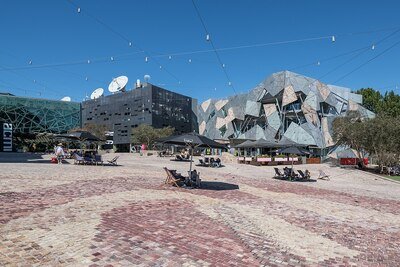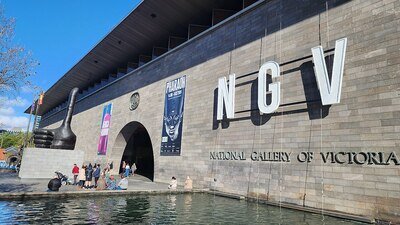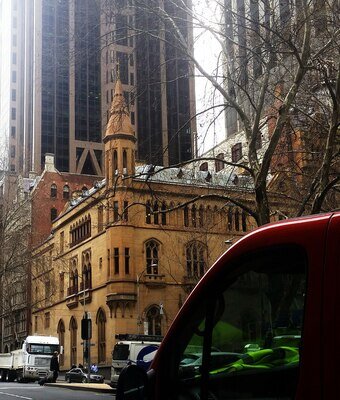
Melbourne stands as Australia's architectural laboratory, a city where European colonial ambitions collided with New World possibilities to create something entirely its own. Unlike Sydney's harbor-focused grandeur, Melbourne's architectural story unfolds across a rational grid, where wide boulevards frame layer upon layer of building styles that chronicle not just Australia's growth, but the evolution of an entire architectural consciousness. From the gold rush prosperity of the 1850s through to today's soaring residential towers, Melbourne has never been content to simply follow architectural trends—it has consistently pushed them forward.
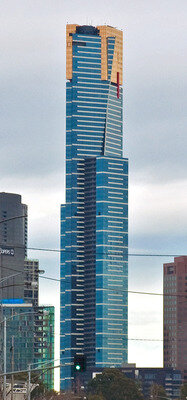
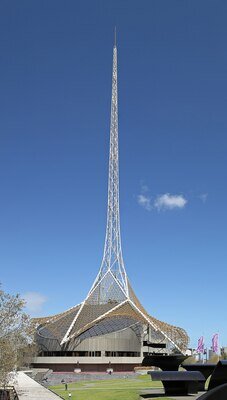
What makes Melbourne architecturally distinctive is its remarkable preservation of Victorian-era streetscapes alongside bold contemporary interventions. The city's famous laneways, originally service alleys behind grand commercial buildings, have become outdoor galleries and intimate dining spaces that demonstrate how adaptive reuse can breathe new life into urban infrastructure. This layered approach to development—respecting the past while embracing the future—has created a built environment where Block Arcade's mosaic floors and Gog and Magog clock can coexist with the crystalline spire of Arts Centre Melbourne and the gold-crowned Eureka Tower.
Melbourne's architectural confidence stems from its unique history as Australia's temporary national capital and the financial heart of the gold rush era. The wealth generated from Victoria's goldfields in the 1850s and 1860s funded an extraordinary building boom that gave the city its collection of grand civic buildings, ornate commercial arcades, and elaborate theaters. This prosperity coincided with the height of the Victorian era, when architectural excess was not just accepted but celebrated, creating a city center that rivals any in the world for its concentration of 19th-century architectural achievement.
Architectural Timeline and Periods
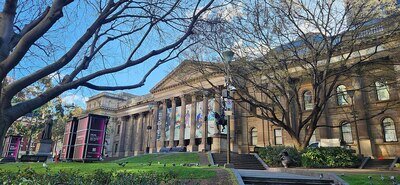
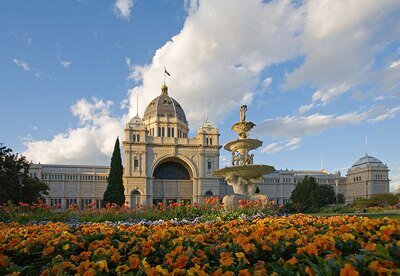
Melbourne's architectural evolution begins with the Colonial Georgian period of the 1830s and 1840s, though few buildings from this era survive. The real story starts with the Gold Rush Boom of the 1850s-1880s, when unprecedented wealth funded the construction of Melbourne's most iconic buildings. Parliament House Victoria represents the confident Neoclassical style of this period, while the Royal Exhibition Building showcases the international exhibition movement's influence on Australian architecture.
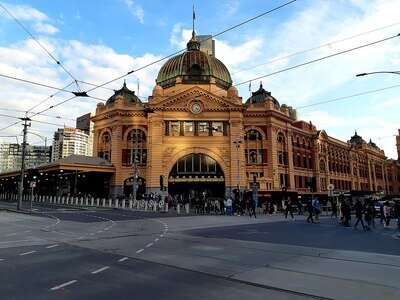
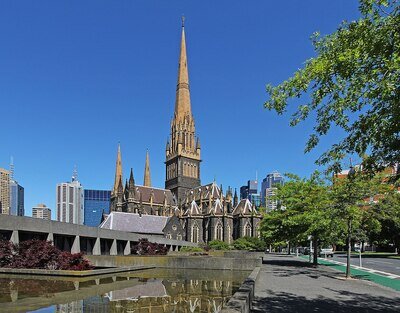
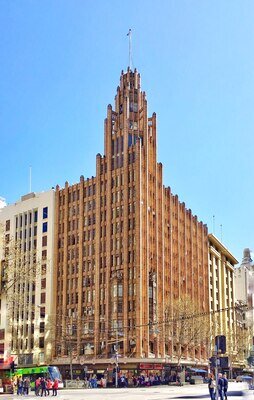
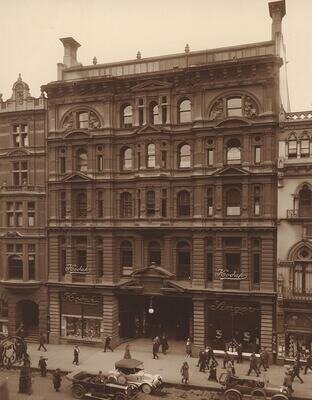
The Victorian High Gothic and Second Empire periods of the 1870s-1890s produced Melbourne's most distinctive landmarks. St Paul's Cathedral demonstrates the Gothic Revival movement's religious architecture, while buildings like the Manchester Unity Building show how Gothic elements were adapted for commercial use well into the 1930s. The Block Arcade and Flinders Street Station represent the pinnacle of Victorian commercial and transportation architecture, combining functional requirements with elaborate decorative programs.
The Interwar period brought Art Deco and Streamline Moderne influences to Melbourne, visible in buildings like Capitol Theatre, designed by Prairie School architects Walter Burley Griffin and Marion Mahony Griffin. This period saw Melbourne beginning to develop its own architectural identity, separate from purely European influences. The post-war Modernist movement arrived in the 1960s with buildings like the Arts Centre Melbourne, whose distinctive spire became an instant city icon.
Contemporary Melbourne architecture, from the 1990s onward, has been marked by innovative residential tower design and adaptive reuse projects. Eureka Tower pioneered residential skyscraper living in Australia, while Australia 108 pushed height limits even further. The Melbourne Museum represents contemporary institutional architecture, demonstrating how modern materials and forms can create distinctive civic landmarks.
Key Neighborhoods and Districts
The Central Business District forms Melbourne's architectural heart, where the city's grandest buildings create urban theater along Collins and Swanston Streets. This area showcases the full range of Melbourne's building periods, from the Old Melbourne Gaol's forbidding bluestone walls to the sleek glass of contemporary office towers. The Paris End of Collins Street, anchored by Block Arcade, represents Melbourne's most refined commercial architecture, where European-inspired buildings create intimate, pedestrian-scaled streetscapes.
Southbank has emerged as Melbourne's contemporary architectural showcase, home to the city's tallest buildings and most ambitious residential projects. This district demonstrates how Melbourne has adapted high-density living to Australian conditions, with towers like Eureka Tower and Australia 108 offering expansive views while contributing to a distinctive skyline. The Arts Centre Melbourne serves as this district's cultural anchor, its spire acting as a visual bridge between the city's historic core and its modern extension.
Carlton represents Melbourne's most intact Victorian residential district, centered around the Royal Exhibition Building and Melbourne Museum. This area shows how grand institutional buildings can anchor entire neighborhoods, with tree-lined streets of preserved 19th-century houses creating a coherent urban fabric. The juxtaposition of the historic Royal Exhibition Building with the contemporary Melbourne Museum demonstrates Melbourne's approach to architectural continuity and change.
Historic Laneways
Melbourne's network of laneways represents a unique architectural typology—narrow service alleys transformed into active urban spaces. These intimate pedestrian environments, originally designed to provide rear access to Collins and Bourke Street buildings, have become outdoor rooms that showcase how small-scale interventions can activate underutilized urban space. The laneways demonstrate Melbourne's talent for adaptive reuse and creative urban planning.
Notable Architects
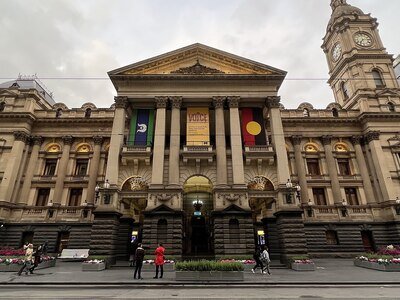
Joseph Reed shaped Victorian-era Melbourne more than any other architect, designing both the Royal Exhibition Building and Melbourne Town Hall. Reed's work demonstrates the confidence of 19th-century Melbourne, combining classical principles with bold scale and rich decoration. His buildings established a template for civic architecture that influenced public building design throughout Australia.
Walter Burley Griffin and Marion Mahony Griffin brought Prairie School modernism to Melbourne through their design of Capitol Theatre. This husband-and-wife team, fresh from their work on Canberra's master plan, introduced spatial concepts and decorative approaches that were radically different from Melbourne's Victorian tradition. Their atmospheric theatre design, with its crystalline ceiling installation, remains one of the city's most distinctive interior spaces.
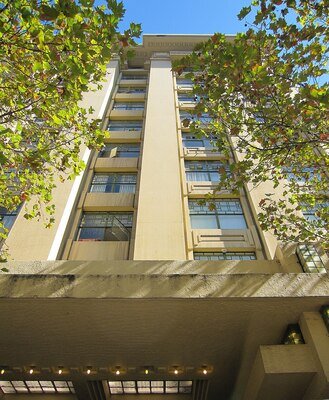
Harry Seidler introduced European Modernism to Melbourne through buildings that emphasized clean lines, functional planning, and integration with landscape. His work helped establish the architectural vocabulary that would define Melbourne's post-war development, showing how international modernist principles could be adapted to Australian conditions and urban contexts.
Fender Katsalidis Architects have defined contemporary Melbourne through their residential tower designs, including Eureka Tower and Australia 108. Their work demonstrates how high-rise living can be both distinctive and contextual, creating buildings that contribute to Melbourne's skyline while responding to the specific conditions of urban Australian life.
What to Notice
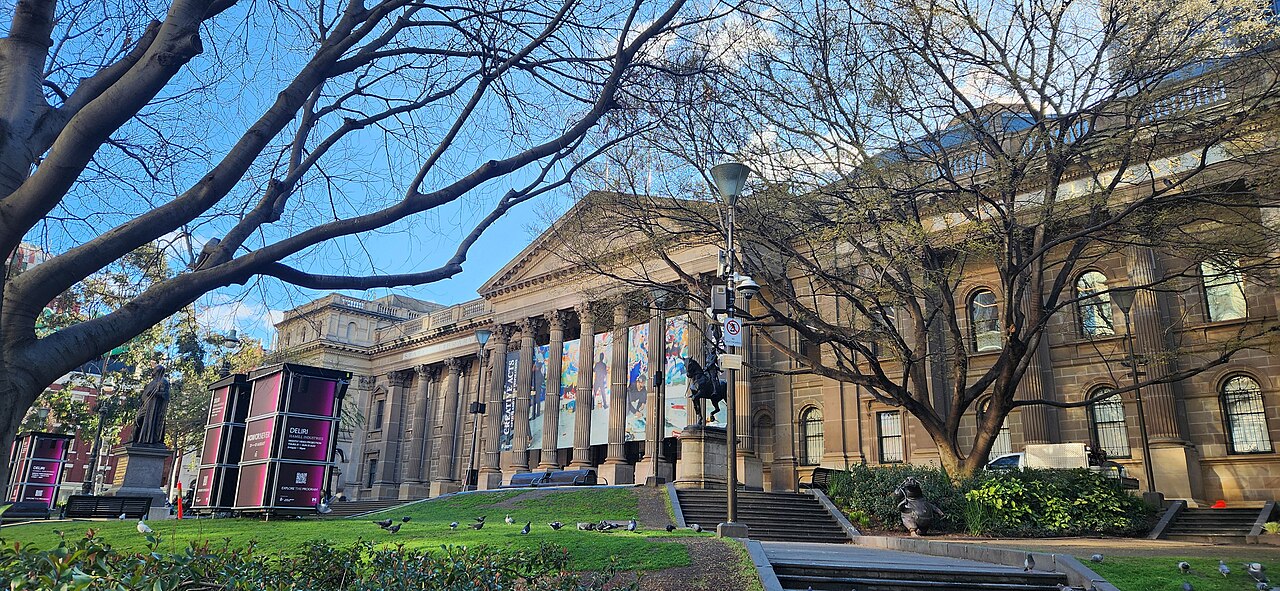
Melbourne's architectural materials tell the story of a city built from local and imported resources. Bluestone, quarried from local basalt, creates the distinctive dark foundations and walls seen in buildings like Old Melbourne Gaol and Parliament House Victoria. This material gives Melbourne buildings their solid, permanent appearance and creates visual continuity across different architectural periods. Look for how bluestone is combined with lighter-colored stone and brick to create contrasts in texture and color.
The city's ornamental ironwork represents some of Australia's finest decorative metalwork, visible in the canopies, balconies, and details of Victorian-era buildings. Block Arcade's interior ironwork and glass roof demonstrate how structural materials became decorative elements, while Flinders Street Station's clock tower shows how iron could be used for both functional and symbolic purposes. Contemporary buildings like Arts Centre Melbourne use steel and glass to create equally dramatic effects with modern materials.
Melbourne's urban planning creates distinctive viewing experiences through its wide boulevards and regular grid system. The city was planned to provide dramatic vista points where civic buildings terminate street views—Parliament House Victoria anchors Spring Street, while Arts Centre Melbourne's spire provides a southern focal point. Stand at the intersection of Collins and Swanston Streets to experience how Melbourne's planners used architecture to create urban landmarks and navigation points.
Architectural Details
Pay attention to Melbourne's distinctive window treatments, from the elaborate Gothic Revival tracery of Manchester Unity Building to the floor-to-ceiling glass of contemporary towers. Victorian-era buildings often feature cast-iron lacework and decorative bargeboards that create intricate shadow patterns, while Modernist buildings emphasize horizontal window bands that emphasize the city's wide urban spaces. These details reveal how architects in different eras responded to Melbourne's climate and light conditions.