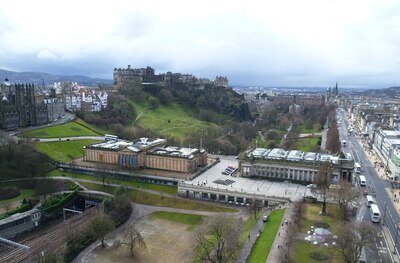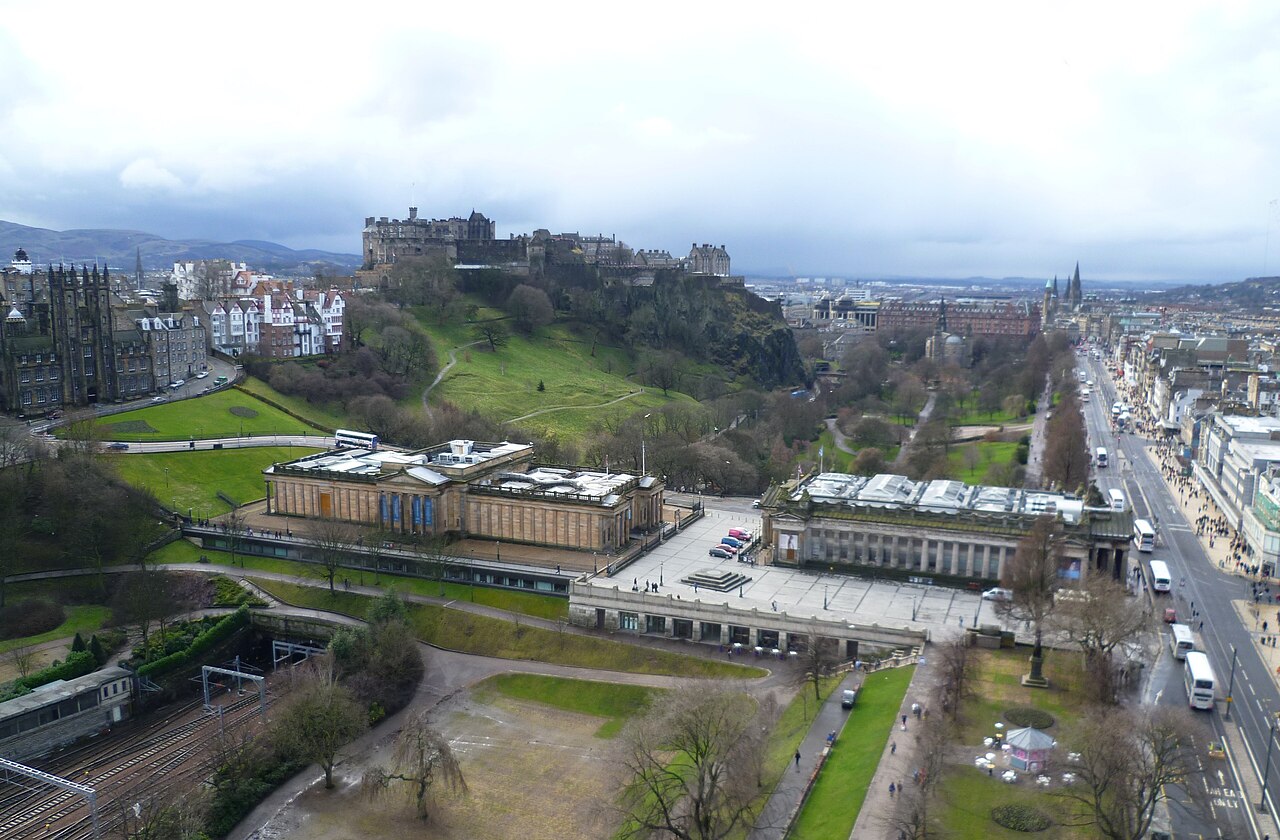
Edinburgh is a city built on drama. Literally: the Old Town clings to a volcanic ridge, its medieval spine dropping steeply from the Castle to Holyroodhouse, while the New Town spreads northward in rational Georgian elegance. This geological split created two cities in one, and the tension between them defines Edinburgh's architectural character. Nowhere else in Europe do you find such a compact, visible contrast between the medieval and the classical.
The city's building material tells the story at a glance. Edinburgh is overwhelmingly a stone city, and the local Craigleith sandstone gives it a warm honey tone that darkens to grey in the rain (which is often). When the volcanic rock of Castle Rock and Arthur's Seat frames these stone buildings against a moody sky, the effect is genuinely theatrical. It's no accident that Edinburgh inspired writers and artists for centuries.
What rewards the architecture-minded visitor is how much range Edinburgh compresses into a walkable area. A single afternoon can take you from a 12th-century chapel to a Neoclassical temple to one of the most provocative parliamentary buildings of the 21st century. Few cities offer that kind of chronological depth within such a tight footprint.
Architectural Timeline
Medieval and Reformation (12th-17th Century)
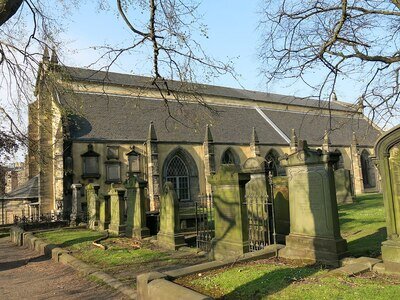
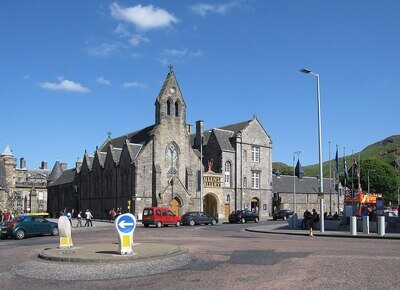
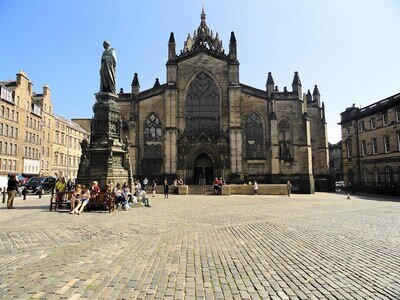
Edinburgh Castle dominates the skyline from its volcanic perch, a complex that accumulated buildings over centuries rather than following a single plan. Below it, the Royal Mile's medieval pattern of narrow "closes" and tall tenement lands survives remarkably intact. St Giles Cathedral, the principal church of Scottish Presbyterianism, dates from the 14th century but received its distinctive crown steeple around 1500. Greyfriars Kirk, built in 1620, marks the transition from medieval to early modern, its simple forms reflecting the austerity of Reformed worship. Holyroodhouse, at the Mile's eastern end, evolved from a medieval abbey guesthouse into a Renaissance palace under James IV and V.
Georgian and Neoclassical (1760s-1840s)
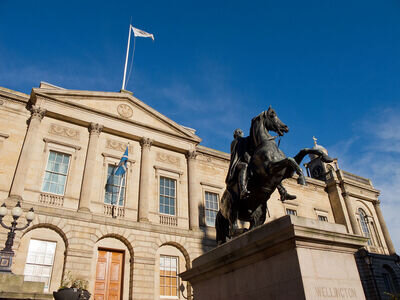
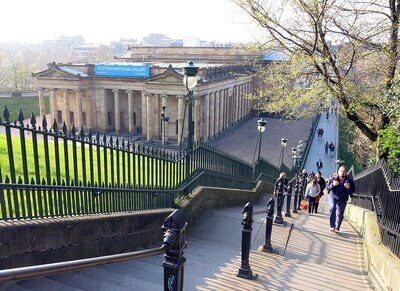
Edinburgh's New Town is one of Europe's greatest planned urban landscapes. Begun in the 1760s to James Craig's competition-winning grid plan, it embodies Enlightenment ideals of order, proportion, and civic virtue. General Register House, designed by Robert Adam, anchors the transition between Old and New Towns with restrained classical authority. The Scottish National Gallery, by William Henry Playfair, sits on the Mound between the two cities, its Ionic temple form earning Edinburgh the nickname "Athens of the North." This period gave Edinburgh its grandest public architecture and its most cohesive urban character.
Victorian Confidence (1840s-1900s)
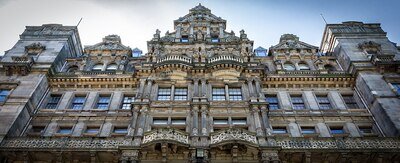
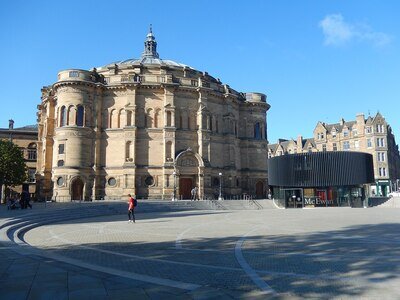
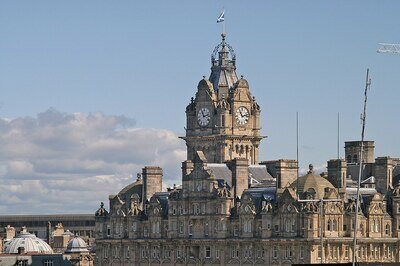
The Victorians added romantic exuberance to Edinburgh's classical restraint. The Scott Monument, a Gothic rocket of Binny sandstone launched in 1844, celebrates Sir Walter Scott with almost delirious ornamental energy. The Balmoral Hotel anchors the east end of Princes Street with baronial swagger, its clock tower a city landmark (famously set three minutes fast to help commuters catch their trains). McEwan Hall brought Italian Renaissance grandeur to the university, while Jenners department store (now reimagined) gave Princes Street a facade of exuberant commercial confidence.
20th Century and Contemporary
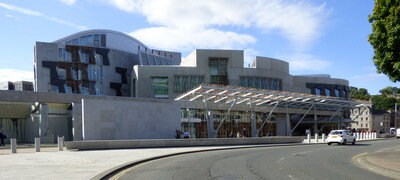
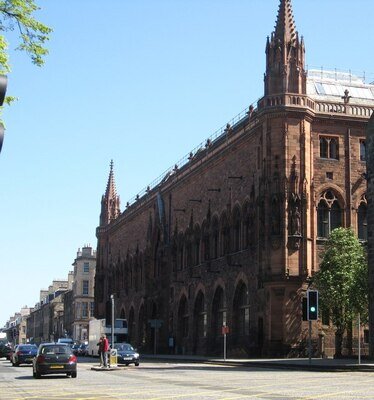
The National Museum of Scotland's 1998 extension by Benson + Forsyth proved that bold contemporary design could sit beside Edinburgh's historic fabric. Its cylindrical entrance tower in pale Moray sandstone echoes the city's tradition of stone building while speaking an entirely modern language. But the real architectural lightning rod is the Scottish Parliament at Holyrood, designed by Enric Miralles and completed in 2004. Its fragmented, landscape-inspired forms sparked fierce debate, but the building rewards close attention with its layered references to Scottish land, boats, and upturned thinking.
Key Neighborhoods
The Old Town
The Royal Mile from Edinburgh Castle to Holyroodhouse is the city's historic spine, but the real architectural discovery lies in the closes and courtyards branching off it. The Old Town pioneered high-rise living centuries before Manhattan: some tenements reached ten or twelve stories in the 17th century. St Giles Cathedral and Greyfriars Kirk anchor the ecclesiastical story, while the closes reveal layers of construction spanning five centuries. The Grassmarket, below the Castle's south face, offers some of the most dramatic views of the volcanic citadel above.
The New Town
Craig's original grid has been extended by subsequent phases, creating a remarkably coherent neoclassical cityscape. Charlotte Square, designed by Robert Adam, is the finest single ensemble. The streets work as architecture: the interplay of crescents, circuses, and straight terraces creates constantly shifting perspectives. General Register House and the Scottish National Gallery sit at the seam where Old meets New, making them natural starting points for understanding the relationship between Edinburgh's two halves.
Holyrood and the University Quarter
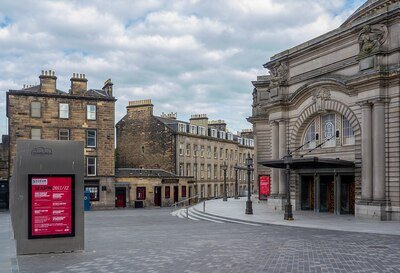
The eastern end of the Old Town has been transformed by the Scottish Parliament and the surrounding development at Holyrood. Nearby, the university campus holds McEwan Hall and several other notable buildings. Usher Hall, slightly west on Lothian Road, brings Beaux-Arts grandeur to the city's concert life. This area captures Edinburgh's willingness to place the contemporary in direct conversation with the historic.
Notable Architects
William Henry Playfair (1790-1857)
Playfair gave Edinburgh its strongest claim to the "Athens of the North" title. The Scottish National Gallery and the nearby Royal Scottish Academy are temple-fronted classical buildings of exceptional refinement. He understood how to place buildings in Edinburgh's dramatic topography, making landscape and architecture inseparable.
Robert Adam (1728-1792)
Scotland's most internationally celebrated architect shaped the New Town's character through General Register House and Charlotte Square, among other works. Adam's neoclassicism was lighter and more decorative than his contemporaries', and his influence on Edinburgh's domestic architecture was profound.
Enric Miralles (1955-2000)
The Catalan architect's Scottish Parliament is one of the most important public buildings of the early 21st century. Miralles died before its completion, but the building carries his vision: a complex, poetic response to Scottish landscape, culture, and democratic aspiration. Love it or argue with it, the Parliament is a building that demands engagement.
George Meikle Kemp (1795-1844)
A self-taught architect and carpenter, Kemp won the competition for the Scott Monument and created one of the most recognizable Gothic Revival structures in Britain. He drowned in the Union Canal before seeing it completed, but his intricate spire remains one of Edinburgh's defining silhouettes.
What to Notice
Watch the stone. Edinburgh's palette is narrower than most cities, but the variation within that range is rich. The warm cream of Craigleith sandstone (now exhausted) contrasts with the cooler grey of later quarries. The National Museum of Scotland uses Moray sandstone to create a contemporary building that still feels like Edinburgh. Volcanic basalt appears in older structures and boundary walls, almost black against the lighter ashlar.
Notice how the city uses levels. Edinburgh is built on hills and ridges, and its architects exploited the topography relentlessly. Buildings that appear to be three stories on one side might be eight stories on another. The bridges connecting Old and New Towns (North Bridge, George IV Bridge) are actually built over older streets, creating a layered city with architecture stacked on architecture.
Look at the skyline from multiple vantage points. From Calton Hill, the classical monuments frame a panorama that stretches from the Castle to Arthur's Seat. From the Grassmarket, the Castle looms with fortress severity. From Princes Street Gardens, the Old Town's roofline creates a jagged medieval profile against the sky. Edinburgh is a city designed to be seen from a distance as much as up close.
Pay attention to the ironwork and doorways of the New Town. The fanlights above Georgian front doors are a quiet art form, each one a slightly different geometric composition. Railings, boot-scrapers, and lampposts from the original New Town development survive in surprising numbers, and their craftsmanship repays close inspection.