Exploring Architectural Influences
Overview of the Building's Architecture
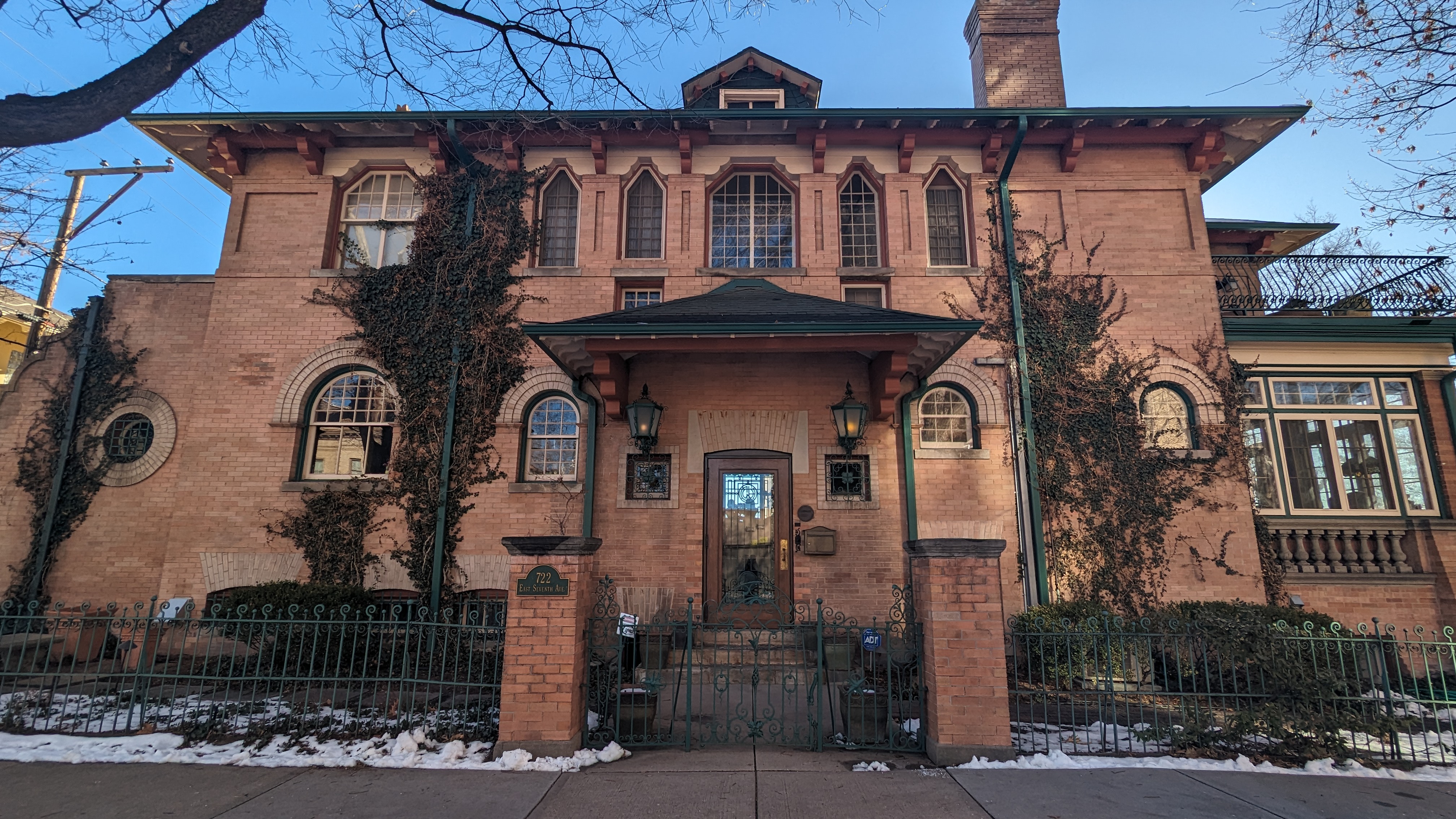
The building in the image showcases an intriguing fusion of architectural influences that come together to create a distinct and harmonious design.
Architectural Details and Influences
- Brickwork: The use of brick in the construction is characteristic of Victorian styles and often seen in Gothic Revival architecture.
- Gables: The steeply pitched gables are reminiscent of the Gothic Revival style that was popular in the 19th century.
- Windows: The arched windows suggest a Romanesque influence, which was known for its use of round arches and solid appearance.
- Eaves: The wide eaves with decorative brackets might indicate an Italianate influence, a style which also favors overhanging eaves.
Gothic Revival
- Definition: A style that started in the late 1740s in England, its revival was inspired by medieval Gothic architecture.
- Characteristics: Pointed arches, steep gables, intricate detailing, and vertical lines.
- Real-World Examples: The Palace of Westminster in London, The Cathedral of Learning in Pittsburgh, and the Washington National Cathedral in Washington, D.C.
Romanesque Architecture
- Definition: An architectural style of medieval Europe characterized by semi-circular arches, robust appearance, and large towers.
- Characteristics: Thick walls, round arches, sturdy pillars, barrel vaults, and large towers.
- Real-World Examples: Speyer Cathedral in Germany, Durham Cathedral in England, and Basilica of Saint-Sernin in France.
Italianate Architecture
- Definition: Emerging in the early 19th century, Italianate architecture borrows elements from 16th-century Italian Renaissance architecture with an added romantic flair.
- Characteristics: Low-pitched or flat roofs, wide eaves with decorative brackets, rounded arch windows, and towers or cupolas.
- Real-World Examples: Osborne House on the Isle of Wight, the Old West End district in Toledo, Ohio, and the Biltmore Estate in North Carolina.
📍 Add This Building to the Map
Add the address to discover nearby architecture and connect this building to its city.